What is a Bill of Lading? A Complete Guide to Understanding Its Role in Global Trade
September 2024 / Nonferrous Metal
In international shipping and trade, a Bill of Lading (B/L) is one of the most critical documents required to ensure the smooth movement of goods from one location to another. It serves multiple functions: a contract between the shipper and carrier, a receipt confirming the goods were loaded, and a title document granting ownership rights to the holder. Understanding the Bill of Lading is essential for managing risks, ensuring compliance, and facilitating smooth transactions for importers, exporters, freight forwarders, and logistics providers.
The Bill of Lading has been a cornerstone of global trade for centuries. As global supply chains grow more complex, the role of this document becomes even more critical. This guide will dive deep into what a Bill of Lading is, the different types available, their components, legal implications, common errors to avoid, and the future of digital Bills of Lading.
What is a Bill of Lading?
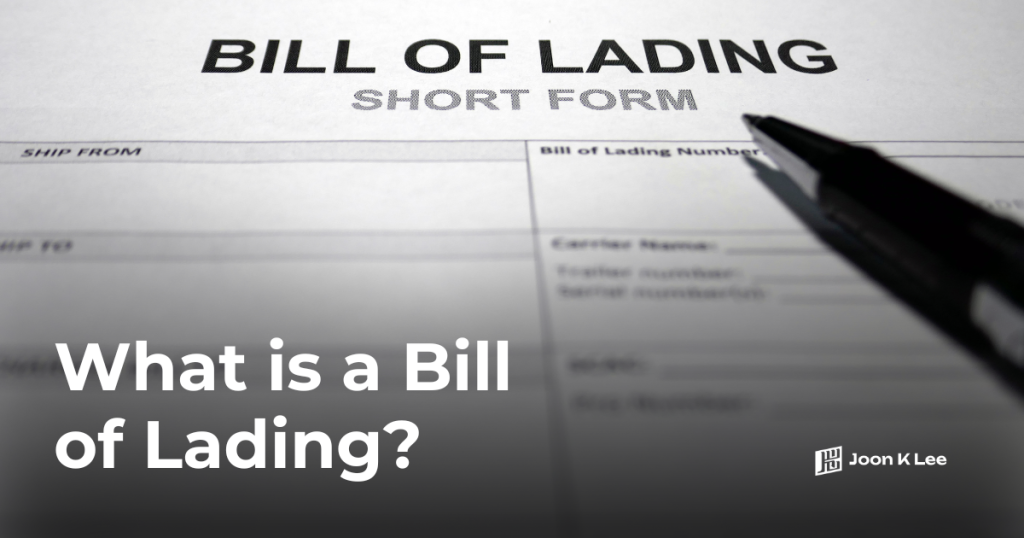
A Bill of Lading is a legally binding document issued by a carrier to a shipper detailing the type, quantity, and destination of the goods being shipped. Historically, the term comes from the Old English word “lading,” meaning “to load a ship.” It has evolved into an essential document in shipping, outlining the terms under which goods are transported and confirming cargo receipt.
The Bill of Lading serves three fundamental purposes in the shipping process:
- Contract of Carriage: It represents the agreement between the carrier and the shipper for the transportation of goods.
- Receipt of Goods: This acknowledges that the goods have been received in good condition and loaded onto the vessel.
- Document of Title: It acts as proof of ownership of the goods, allowing the holder to claim the goods at the destination or transfer ownership while the goods are in transit.
Understanding these roles is crucial for anyone involved in international trade, as they impact how goods are handled, financed, and insured.
Different Types of Bills of Lading
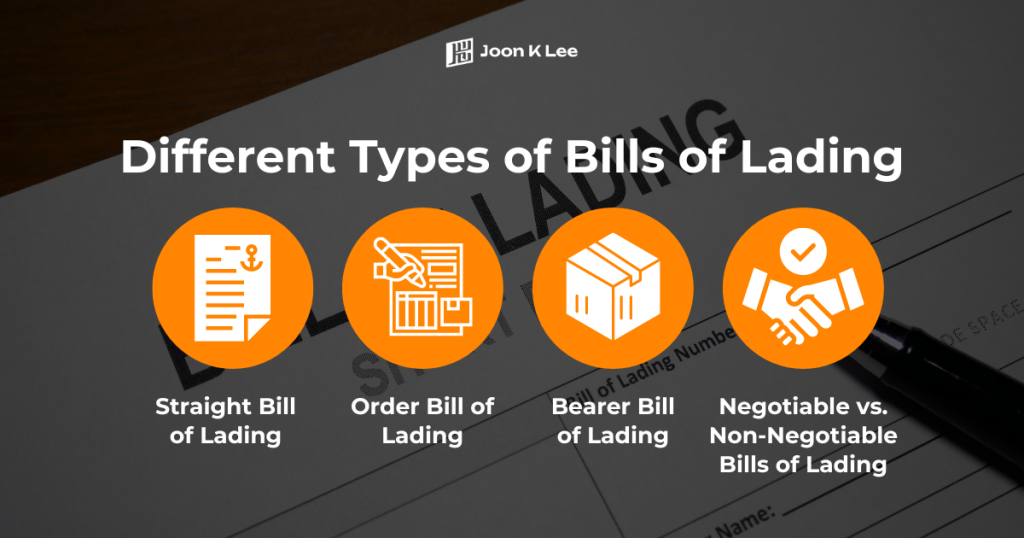
The type of Bill of Lading used in a shipment can significantly affect the handling and transfer of goods. Different types cater to various needs and legal scenarios:
- Straight Bill of Lading: This type is non-negotiable, meaning it is used when the goods are shipped directly to a specific consignee (the recipient). Only the named consignee can take delivery of the goods. It is often used when the payment has already been made, or there is no need for the transfer of ownership during transit.
- Order Bill of Lading: A negotiable Bill of Lading that allows the goods to be transferred to a third party by endorsement. This type is commonly used in international trade because it provides flexibility, allowing the sale of goods while they are still in transit. The holder of the original Bill of Lading can endorse it to another party, transferring ownership.
- Bearer Bill of Lading: This rare type allows the goods to be delivered to whoever holds the Bill of Lading, effectively making it a bearer instrument. Because of the risk associated with it (such as theft or fraud), it is less commonly used but can be useful in some trade situations requiring high flexibility.
- Negotiable vs. Non-Negotiable Bills of Lading: Negotiable Bills of Lading, like the Order Bill of Lading, allow the transfer of ownership during transit, making them versatile for global trade transactions. Non-negotiable Bills of Lading, like the Straight Bill of Lading, restrict ownership transfer, providing more security but less flexibility.
Each type of Bill of Lading serves specific purposes and is chosen based on the nature of the shipment, payment terms, and risk considerations.
Key Components of a Bill of Lading
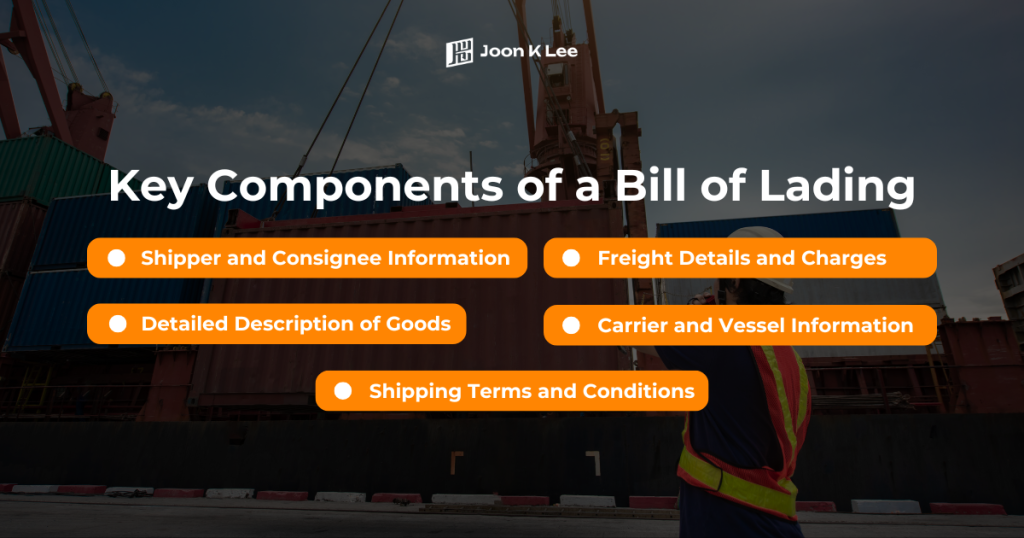
A Bill of Lading is a detailed document that must include several essential components to ensure that it fulfills its legal and logistical roles effectively:
- Shipper and Consignee Information: Clear identification of the shipper (the party sending the goods) and the consignee (the party receiving the goods). This information must be accurate to ensure the goods reach the intended recipient.
- Detailed Description of Goods: A comprehensive description of the goods, including type, quantity, weight, dimensions, and packaging details. This section may also specify any special handling requirements, such as temperature control for perishables or hazardous material handling.
- Shipping Terms and Conditions: The terms under which the shipment is made, including INCOTERMS (International Commercial Terms) that define the responsibilities of buyers and sellers regarding delivery, risk, and insurance. This section also includes specific delivery instructions and timelines.
- Freight Details and Charges: Information on who is responsible for paying the freight charges (prepaid or collect) and the amount due. This section may also cover demurrage charges (fees for delays) and any other shipping costs.
- Carrier and Vessel Information: Details about the carrier (the party responsible for transporting the goods), the vessel or mode of transport used, and the route. Accurate carrier information is essential for tracking and accountability.
Each of these components plays a vital role in the document’s effectiveness as a contract, receipt, and title. Any inaccuracies can lead to disputes, delays, and financial losses.
Functions of a Bill of Lading in Global Trade
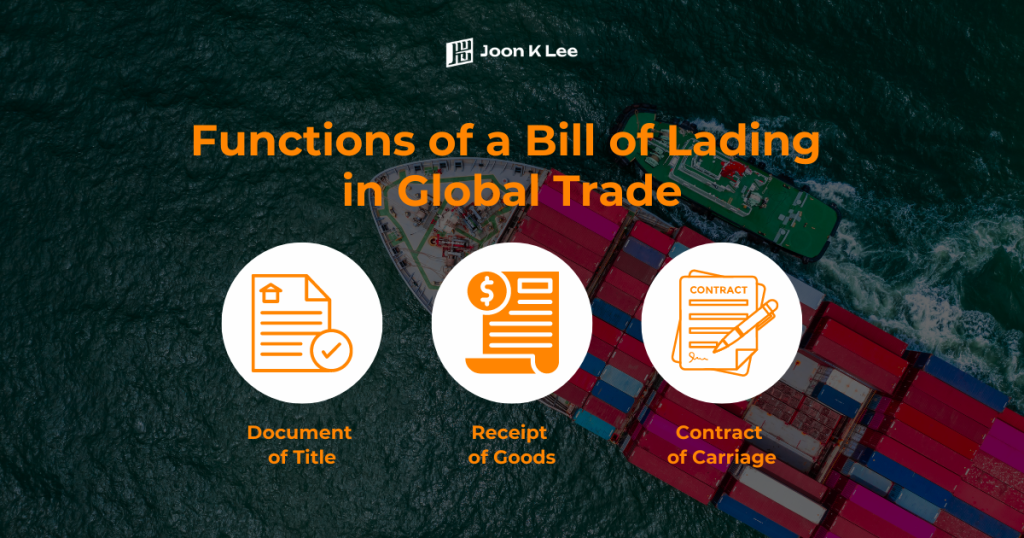
The Bill of Lading has three primary functions that are crucial in international trade:
- Receipt of Goods: It serves as a formal receipt from the carrier, confirming that they have received the goods in good condition, as stated in the document. This receipt function is critical for resolving disputes about damage or loss during transit.
- Document of Title: This is the most significant function, as it gives the holder legal rights to claim ownership of the goods or transfer those rights to another party. This feature is vital for financing and selling goods in transit.
- Contract of Carriage: It specifies the terms and conditions under which the goods are transported, including the carrier’s liabilities and obligations. It acts as a binding agreement between the shipper and the carrier.
Understanding these functions helps businesses manage risks, ensure compliance, and facilitate smoother trade operations.
Legal Implications and Responsibilities Tied to the Bill of Lading
The Bill of Lading carries significant legal weight, and both shippers and carriers must understand their rights and responsibilities:
- Liability of Carriers and Shippers: Carriers are responsible for transporting the goods safely to the destination as agreed. If the goods are damaged or lost in transit, the carrier may be liable, depending on the terms specified in the Bill of Lading. Shippers must ensure that the information provided is accurate to avoid disputes and potential liabilities.
- Legal Protections and Dispute Resolution: The Bill of Lading provides legal protections to both parties, outlining the procedures for claims and dispute resolution. In case of discrepancies or damage, the document serves as a reference point for resolving conflicts.
- Common Legal Challenges: Common legal challenges associated with Bills of Lading include issues related to misdelivery, fraud, incorrect or incomplete information, and disputes over damages or loss of goods. Misdelivery occurs when the carrier releases the goods to a party that does not have the legal right to them, often due to incorrect details on the Bill of Lading. Fraud can occur if someone gains access to a negotiable Bill of Lading and unlawfully claims ownership of the goods. Incorrect or incomplete information on the Bill of Lading can lead to legal disputes and financial losses, emphasizing the need for accuracy and thorough verification.
Common Errors and How to Avoid Them
Errors in the preparation or handling of a Bill of Lading can lead to significant problems, including shipment delays, financial losses, and legal disputes. Common errors include:
- Incorrect or Incomplete Information: This could involve wrong names, addresses, or descriptions of the goods. Ensure all fields are filled out accurately and cross-checked against other shipping documents, such as the Commercial Invoice and Certificate of Origin.
- Failure to Specify Freight Charges: Not clearly stating who is responsible for freight charges (prepaid or collected) can lead to confusion and disputes. Clearly indicate these details in the Bill of Lading to avoid misunderstandings.
- Improper Endorsement: For negotiable Bills of Lading, improper endorsement (signing over the document to another party) can invalidate the document and lead to disputes. Ensure endorsements are made correctly and are properly documented.
- Lack of Clarity in Terms and Conditions: Vague or ambiguous terms in the Bill of Lading can cause disagreements between the shipper, consignee, and carrier. Ensure that all terms are clearly defined, particularly those related to liability, delivery timelines, and claims procedures.
- Not Keeping Track of Amendments: Changes to a Bill of Lading must be documented and communicated to all parties involved. Failure to keep track of amendments can lead to significant legal and logistical issues.
To avoid these errors, companies should establish robust verification processes, train staff on proper documentation practices, and, if possible, consult with trade compliance experts or legal advisors.
Digitalization and the Future of Bills of Lading
With the rise of digitalization in global trade, the Electronic Bill of Lading (eB/L) is becoming increasingly popular. Traditional paper-based Bills of Lading have several limitations, including the risk of loss, delays in delivery, and susceptibility to fraud. The eB/L aims to address these challenges by providing a secure, digital alternative that is easier to manage and track.
- Benefits of Digitalization: Electronic Bills of Lading offer several advantages over their paper counterparts:
- Efficiency: Reduces the time and cost associated with printing, handling, and transporting physical documents.
- Speed: Enables faster transfer of documents between parties, reducing the risk of delays.
- Security: Digital formats can incorporate advanced encryption and blockchain technology to prevent tampering and fraud.
- Sustainability: Reduces paper usage and contributes to more environmentally friendly trade practices.
- Challenges and Regulatory Acceptance: Despite the benefits, the adoption of eB/Ls faces challenges, particularly concerning regulatory acceptance and standardization. Different countries and jurisdictions have varying rules about the recognition of electronic documents, which can complicate their use in international trade. Additionally, stakeholders need to invest in compatible technology and platforms to support electronic Bills of Lading.
- The Role of Blockchain and Smart Contracts: Blockchain technology is increasingly being explored to enhance the security and transparency of eB/Ls. Smart contracts can automate the execution of terms when certain conditions are met, reducing the need for intermediaries and enhancing efficiency in the shipping process.
As digitalization continues to evolve, businesses should consider transitioning to electronic Bills of Lading to stay competitive, reduce risks, and streamline their global trade operations.
Mastering the Bill of Lading for Efficient Global Trade
In the world of global trade, the Bill of Lading remains an indispensable document that facilitates the smooth movement of goods across borders. Understanding its various types, key components, legal implications, and common errors is crucial for anyone involved in international shipping and logistics. Moreover, embracing digitalization and the future of eB/Ls can offer significant advantages in terms of efficiency, security, and sustainability.
For businesses involved in importing and exporting nonferrous metals or other goods, mastering the use of Bills of Lading is essential for optimizing shipping operations, managing risks, and ensuring compliance with global trade regulations. By staying informed, training staff, and leveraging expert guidance, companies can maximize the benefits of this vital document.
If you need support navigating the complexities of trade documentation and compliance, Inquivix Technologies offers expert solutions tailored to your business needs. We help you streamline your global trade operations, avoid costly errors, and stay ahead of regulatory changes. Contact us today to learn more about how we can help you achieve trade efficiency and compliance in your logistics processes.

Written by Joon K Lee
Owner

Everything You Need To Know About Conversions
Conversion rates are one of the most important indicators you should look…

What are the Best SaaS Tools for Digital Marketers?
Software as a Service, or SaaS, is a cloud-computing software accessed through…