Commercial Invoice: The Essential Guide to Its Role and Importance in International Trade
September 2024 / Nonferrous Metal
In international trade, the Commercial Invoice is one of the most critical documents required to facilitate the movement of goods across borders. It serves as a key component of the shipping and customs process, providing vital information about the goods being transported, their value, and the terms of sale. For importers, exporters, freight forwarders, and customs brokers, a well-prepared Commercial Invoice ensures smooth customs clearance, accurate duty assessment, and compliance with regulatory requirements.
This guide dives deep into what a Commercial Invoice is, its essential elements, its role in international trade, and best practices to ensure accuracy and compliance. Whether you are a seasoned trader or new to the world of import and export, this comprehensive guide will help you master the Commercial Invoice to streamline your global trade operations.
What is a Commercial Invoice?

A Commercial Invoice is a legal document issued by the seller (exporter) to the buyer (importer) that outlines the goods being sold, their quantity, price, and terms of sale. It is essentially a bill for the goods, detailing the transaction between the exporter and the importer. The Commercial Invoice is required by customs authorities in both the country of export and import to determine the true value of the goods for the assessment of duties and taxes.
Unlike a Bill of Lading, which serves as a contract of carriage and a document of title, the Commercial Invoice is primarily focused on the financial aspects of the transaction. It provides a record of the sale and is used to support the payment terms agreed upon between the buyer and seller.
Key Components of a Commercial Invoice
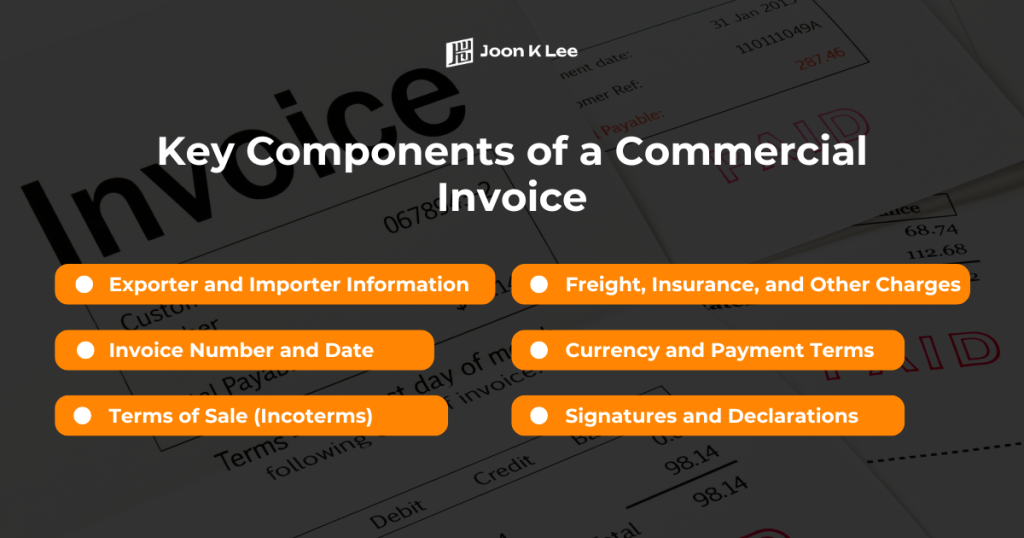
A well-prepared Commercial Invoice should contain several key components that provide essential information to all parties involved in the transaction, including customs authorities:
- Exporter and Importer Information: The full name, address, and contact details of both the exporter (the seller) and the importer (the buyer). Accurate information is crucial to ensure that the shipment reaches the intended recipient and that all parties are properly identified for regulatory purposes.
- Invoice Number and Date: The invoice number and date of issuance are unique identifiers that help track the transaction and serve as references for both the buyer and seller, as well as for customs clearance.
- Description of Goods: A detailed description of the goods being shipped, including the type, quantity, unit price, and total value. This section should also specify the goods’ country of origin, which is important for determining customs duties and compliance with trade agreements.
- Terms of Sale (Incoterms): The Incoterms (International Commercial Terms) define the responsibilities of the buyer and seller regarding delivery, risk, and insurance. Common Incoterms include EXW (Ex Works), FOB (Free On Board), CIF (Cost, Insurance, and Freight), and DAP (Delivered at Place). Clear definition of these terms is crucial for avoiding disputes and ensuring smooth transactions.
- Currency and Payment Terms: The currency in which the transaction is conducted (e.g., USD, EUR) and the payment terms the buyer and seller agree upon. This can include details such as payment due date, method of payment (e.g., Letter of Credit, bank transfer), and any applicable discounts or penalties.
- Freight, Insurance, and Other Charges: A breakdown of any additional costs associated with the shipment, such as freight charges, insurance, handling fees, and packaging costs. This information helps customs authorities assess the total landed cost of the goods.
- Signatures and Declarations: The exporter’s or an authorized representative’s signature, along with any declarations required by customs authorities. This may include a statement certifying the accuracy of the information provided and compliance with export regulations.
Each of these components plays a vital role in ensuring that the Commercial Invoice is complete, accurate, and compliant with international trade regulations.
The Role of a Commercial Invoice in International Trade
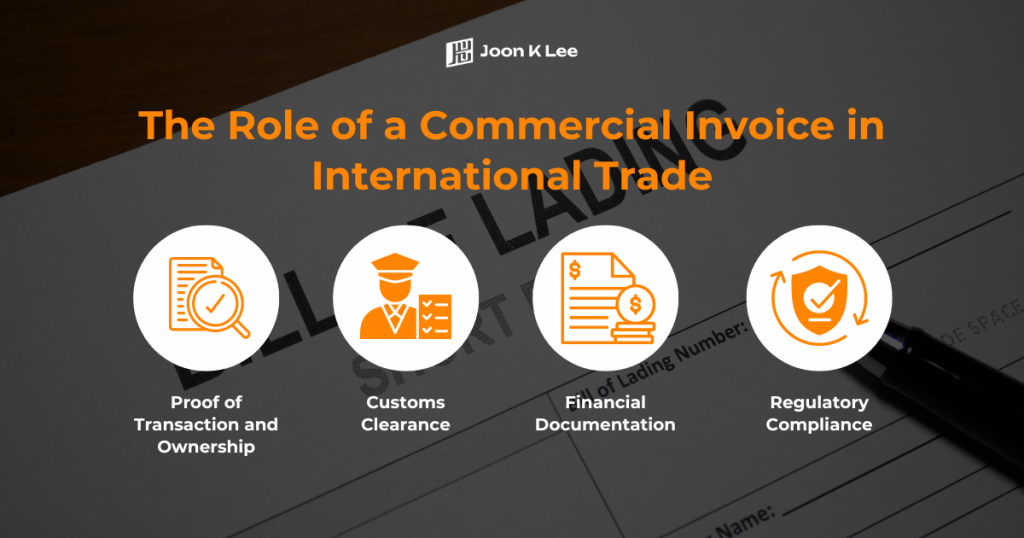
The Commercial Invoice serves several critical functions in global trade, making it an indispensable document for any cross-border transaction:
- Proof of Transaction and Ownership: The Commercial Invoice acts as proof of the sale between the exporter and the importer, detailing the goods being traded and their agreed-upon price. This is essential for establishing ownership and supporting claims in the event of disputes.
- Customs Clearance: Customs authorities use the Commercial Invoice to verify the contents of a shipment and assess the appropriate duties and taxes. An accurate and detailed Commercial Invoice ensures smooth customs clearance and helps avoid delays, penalties, and additional inspections.
- Financial Documentation: Financial institutions and banks use commercial invoices to facilitate payment transactions, especially when a Letter of Credit (L/C) is used as the payment method. The document provides the necessary details to support the release of funds and the completion of the transaction.
- Regulatory Compliance: A Commercial Invoice helps ensure compliance with various trade regulations, including import/export controls, anti-dumping laws, and preferential trade agreements. Providing accurate information on the origin, value, and classification of goods is critical for taking advantage of tariff reductions and avoiding non-compliance penalties.
Common Mistakes to Avoid When Preparing a Commercial Invoice

Errors in a Commercial Invoice can lead to significant issues, including shipment delays, fines, and legal disputes. Some common mistakes to avoid include:
- Inaccurate Descriptions of Goods: Vulgar or incorrect descriptions of goods can result in misclassification by customs authorities, leading to incorrect duty assessments or even the seizure of goods. Ensure all descriptions are clear, detailed, and match the Harmonized System (HS) code classification.
- Incorrect Invoice Value: Under-invoicing or over-invoicing can cause customs to suspect fraud or tax evasion, resulting in audits, fines, or shipment holds. Ensure the value on the invoice reflects the actual transaction value agreed upon by the buyer and seller.
- Omitting Required Information: Failing to include essential details, such as Incoterms, currency, or country of origin, can delay customs clearance and lead to additional scrutiny. Double-check that all mandatory fields are filled out accurately.
- Discrepancies with Other Shipping Documents: Inconsistencies between the Commercial Invoice and other shipping documents, such as the Bill of Lading or Certificate of Origin, can create confusion and delays. Cross-verify all documents to ensure consistency.
- Neglecting Regulatory Declarations: Some shipments may require specific declarations related to hazardous materials, restricted goods, or preferential trade agreements. Ensure all necessary declarations are included and comply with the relevant regulations.
To avoid these pitfalls, companies should establish robust processes for preparing and reviewing Commercial Invoices, train staff on trade documentation best practices, and consider consulting with customs brokers or trade compliance experts.
How to Ensure Accuracy and Compliance in a Commercial Invoice
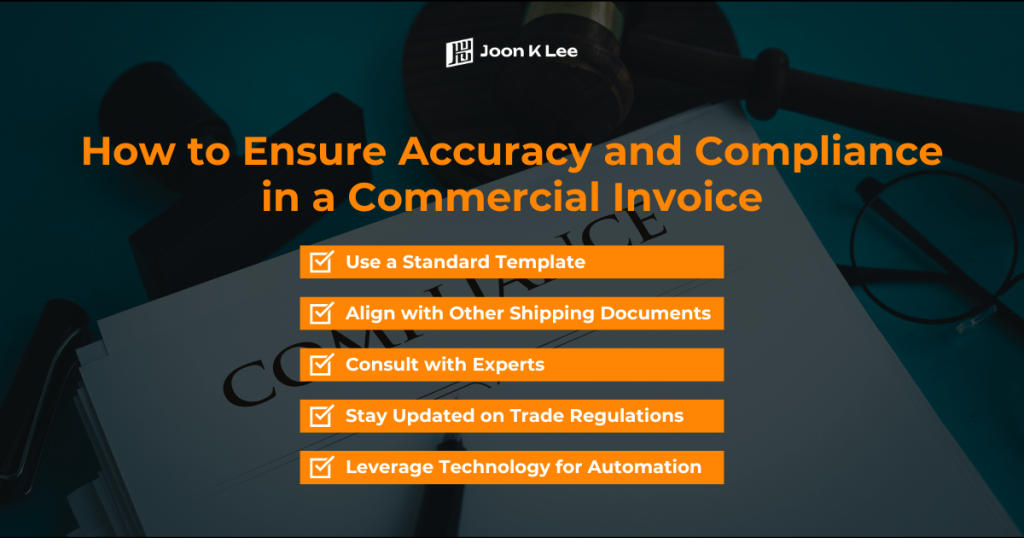
A well-prepared Commercial Invoice can be the difference between a smooth transaction and a costly delay. Here are some best practices to ensure accuracy and compliance:
- Use a Standard Template: Utilizing a standardized template for Commercial Invoices helps ensure that all necessary information is included and presented consistently. This reduces the risk of missing critical details and facilitates easier processing by customs authorities.
- Align with Other Shipping Documents: Ensure that the Commercial Invoice aligns with other shipping documents, such as the Bill of Lading, Packing List, and Certificate of Origin. Consistency across all documents is crucial for avoiding discrepancies that could trigger customs inspections.
- Consult with Experts: Engaging with customs brokers, freight forwarders, or trade compliance experts can provide valuable guidance on the proper preparation of Commercial Invoices, particularly for complex shipments involving multiple countries and regulatory regimes.
- Stay Updated on Trade Regulations: International trade regulations are constantly evolving, and it is essential to stay informed about changes in tariff classifications, duty rates, and documentation requirements. To keep up with regulatory changes, regularly consult official resources, such as customs websites and trade associations.
- Leverage Technology for Automation: Utilizing digital tools and software solutions for trade documentation can streamline the preparation of Commercial Invoices, reduce errors, and ensure compliance. Many platforms offer automated data entry, document generation, and real-time regulatory updates.
The Future of Commercial Invoices: Digital Transformation

The global shift towards digitalization is transforming how trade documentation is managed, and the Commercial Invoice is no exception. Digital Commercial Invoices offer several advantages over traditional paper-based formats:
- Efficiency and Speed: Digital invoices can be generated, transmitted, and processed faster than paper documents, reducing the risk of delays and improving cash flow.
- Reduced Errors and Costs: Automation reduces manual data entry, minimizing the risk of errors and associated costs. Digital platforms also provide validation checks to ensure compliance with trade regulations.
- Enhanced Security and Traceability: Digital formats can incorporate encryption and blockchain technology to prevent tampering and ensure the authenticity of the document. This adds a layer of security that is particularly valuable in high-value or sensitive transactions.
- Sustainability: Reducing paper usage through digital invoices contributes to more sustainable trade practices, aligning with global efforts to reduce environmental impact.
As digital transformation continues to evolve, businesses should consider adopting digital solutions for Commercial Invoices to stay competitive, improve efficiency, and reduce risks.
Optimizing Your Global Trade with Accurate Commercial Invoices
The Commercial Invoice is more than just a financial document—it is a vital part of the international trade process that ensures regulatory compliance, smooth customs clearance, and accurate financial transactions. Understanding its role, key components, and best practices for accuracy and compliance is crucial for any business engaged in global trade.
By leveraging expert guidance, staying updated on regulatory changes, and adopting digital tools, companies can optimize their trade operations, reduce risks, and enhance their competitive advantage in the global market.
Inquivix Technologies offers comprehensive solutions tailored to your business needs if you want to streamline your trade documentation and ensure compliance. Contact us today to learn more about how we can help.


Written by Joon K Lee
Owner

Everything You Need To Know About Conversions
Conversion rates are one of the most important indicators you should look…

What are the Best SaaS Tools for Digital Marketers?
Software as a Service, or SaaS, is a cloud-computing software accessed through…