A Comprehensive Guide to Import and Export Regulations for Nonferrous Metals
September 2024 / Nonferrous Metal
In today’s interconnected global economy, the trade of nonferrous metals—such as aluminum, copper, zinc, and nickel—plays a critical role in supporting various industries, from automotive and aerospace to electronics and renewable energy. As the demand for these valuable resources continues to grow, businesses involved in importing and exporting nonferrous metals must navigate an increasingly complex web of regulations.
Understanding the regulatory environment is not merely about compliance; it’s about staying competitive in a dynamic market. Import and export regulations can directly impact costs, supply chain efficiency, and market access. Therefore, having a clear grasp of tariffs, quotas, customs procedures, and region-specific rules is essential for companies seeking to optimize their operations and minimize risks. This comprehensive guide delves into the key regulations governing the trade of nonferrous metals, regional compliance requirements, and strategies for successful global trade management.
Global Trade Dynamics of Nonferrous Metals
Nonferrous metals, which do not contain significant amounts of iron, are highly valued for their non-magnetic properties, resistance to corrosion, and excellent conductivity. These characteristics make them indispensable in various applications. Common nonferrous metals include aluminum, copper, lead, nickel, tin, titanium, and zinc, each with unique properties that serve critical functions in construction, transportation, electronics, and energy.
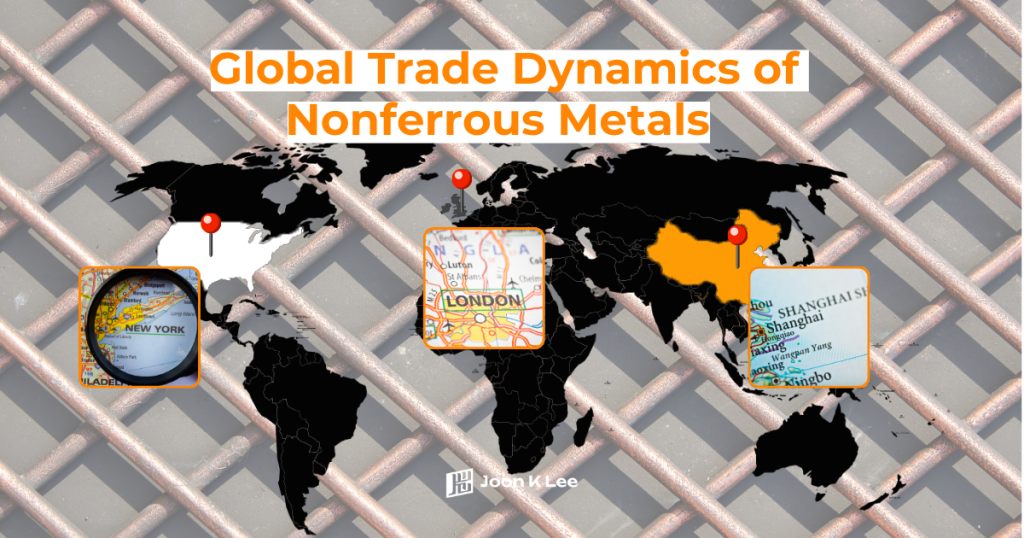
The global trade of nonferrous metals is centered around key markets and trading hubs. The London Metal Exchange (LME), Shanghai Futures Exchange (SHFE), and New York Mercantile Exchange (NYMEX) are some of the most prominent platforms for trading these metals. Prices are influenced by various factors, including supply and demand dynamics, geopolitical developments, economic policies, technological advancements, and environmental regulations. For traders and businesses, staying informed about these factors is crucial to navigating the complexities of international markets.
Key Import and Export Regulations for Nonferrous Metals
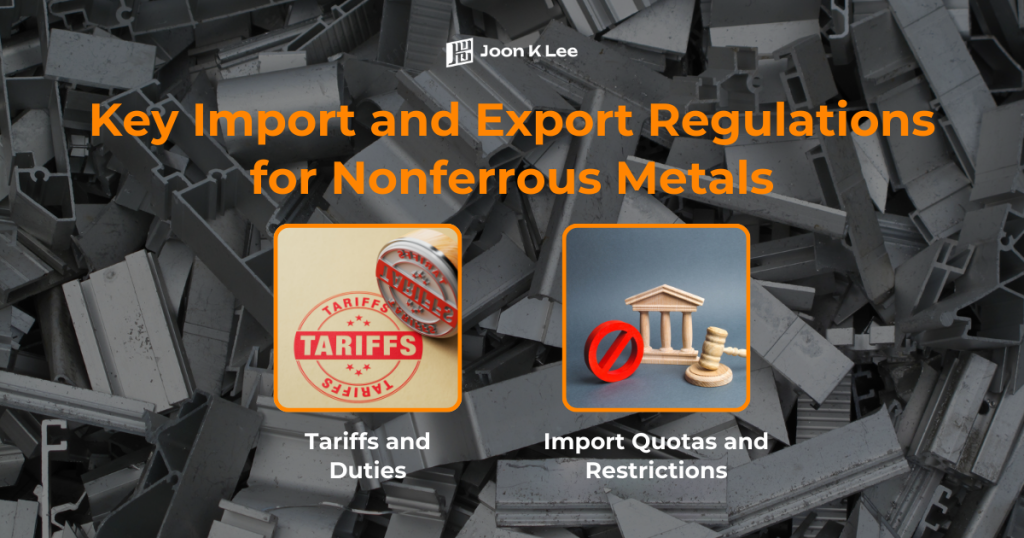
The import and export of nonferrous metals are regulated by a complex framework of rules that vary by country and region. These regulations protect domestic industries, ensure fair trade practices, maintain environmental standards, and address national security concerns.
Tariffs and Duties
Tariffs are taxes imposed on imported goods and are a significant factor in the global trade of nonferrous metals. These taxes can affect the cost structure of trading nonferrous metals, impacting pricing strategies and overall market competitiveness. For instance, the United States has imposed tariffs on steel and aluminum imports under Section 232 of the Trade Expansion Act to protect domestic industries from foreign competition. These tariffs have led to retaliatory measures from other countries, affecting global trade flows of nonferrous metals like aluminum and copper.
To navigate these tariffs, businesses must understand the specific tariff classifications of their products, as different forms of the same metal can fall under different tariff rates. For example, raw aluminum ingots may be tariffed differently than finished aluminum products or alloys. Proper classification and awareness of duty rates in both importing and exporting countries can help companies manage costs more effectively and optimize their supply chain strategies.
Import Quotas and Restrictions
Import quotas are limits set by governments on the quantity of specific goods that can be imported into a country over a defined period. These quotas are often used to protect domestic industries from excessive foreign competition and to stabilize local markets. For nonferrous metals, quotas may be applied to control the volume of imports for materials such as aluminum, copper, and zinc.
Import quotas can have a significant impact on trade, particularly when demand for a specific metal exceeds the set quota. Businesses must carefully monitor quota levels, renewal periods, and any changes to these policies to avoid supply chain disruptions and additional costs associated with exceeding import limits. Companies can strategically plan their sourcing and inventory management by staying informed about these restrictions.
Customs Procedures and Documentation
Compliance with customs procedures and proper documentation is crucial for the smooth import and export of nonferrous metals. Ensuring that all necessary paperwork is in order can prevent costly delays, fines, or even the seizure of goods at the border. Key documents typically required for importing and exporting metals include:
- Bill of Lading: A legal document issued by a carrier to acknowledge receipt of cargo for shipment.
- Commercial Invoice: A document that provides details about the transaction between the exporter and the importer.
- Certificate of Origin: A document certifying the country in which the goods were manufactured.
- Importer Security Filing (ISF): A U.S. Customs and Border Protection (CBP) requirement that mandates advance submission of cargo information for shipments arriving by sea.
In addition to these documents, businesses may need to provide product-specific certifications, such as quality and safety certifications, to comply with local regulations. Adhering to customs declarations, product classifications, and valuation rules is essential to avoid penalties and ensure a seamless trade process.
Anti-Dumping Laws and Safeguards
Anti-dumping laws are designed to protect domestic industries from unfair trade practices, such as foreign companies selling goods at prices below their market value to gain a competitive advantage. These laws are particularly relevant to nonferrous metals trading, where market dynamics can lead to significant price fluctuations. Countries may impose anti-dumping duties on specific nonferrous metal products to counteract dumping and safeguard local industries.
For example, the European Union has imposed anti-dumping duties on certain aluminum extrusions imported from countries like China. These duties can be substantial and affect the competitiveness of imported goods, altering trade dynamics. It is crucial for traders to be aware of ongoing anti-dumping investigations and their potential outcomes, as they can lead to sudden changes in import costs and market access.
Region-Specific Regulations and Compliance Requirements
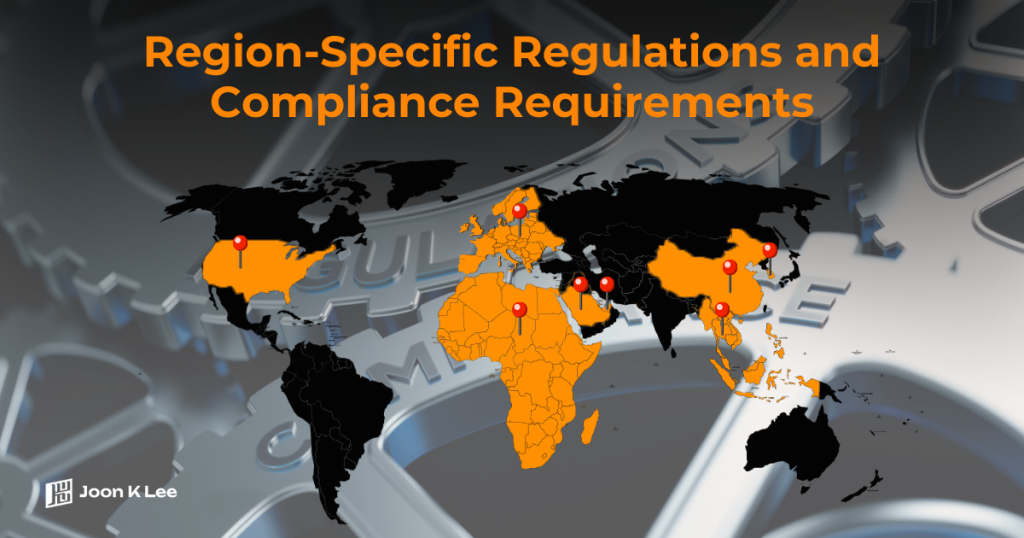
The regulatory landscape for nonferrous metals import and export varies significantly by region. Each market has its own set of rules and compliance requirements that traders must navigate carefully.
South Korea: Navigating a Dynamic Trade Environment
South Korea is a significant player in the global nonferrous metals market, with its robust industrial base and strategic location in Northeast Asia. The country is known for its advanced manufacturing sector, which heavily relies on importing and exporting nonferrous metals such as aluminum, copper, and zinc. To maintain a competitive edge, businesses operating in South Korea must navigate a well-regulated trade environment governed by several key policies and regulatory bodies.
South Korea’s import and export regulations for nonferrous metals are shaped by its commitments to global trade agreements, national security interests, and environmental sustainability goals. The country has established various measures to ensure fair trade practices, protect domestic industries, and comply with international standards.
Customs Duties and Tariff Regulations
South Korea, like many other countries, imposes tariffs and customs duties on the import and export of nonferrous metals. The tariff rates vary depending on the type of metal and its form—whether raw, semi-finished, or finished products. The Korea Customs Service (KCS) oversees these duties, ensuring that imports comply with national laws and international agreements.
Businesses must ensure accurate tariff classifications for their metal products to avoid unexpected costs and delays. South Korea also offers tariff exemptions and reductions for specific categories of goods under its Free Trade Agreements (FTAs) with several countries, including the United States, China, and the European Union. Leveraging these agreements can provide significant cost advantages for companies that meet the criteria.
Environmental Regulations and Compliance
South Korea has stringent environmental regulations affecting the import and export of nonferrous metals, especially regarding scrap metal and secondary raw materials. The Ministry of Environment (ME) mandates strict standards for the import of metal scrap to ensure it meets environmental safety and quality criteria. This includes requirements for contamination levels, recycling processes, and documentation to prove compliance with South Korean environmental laws.
The country’s Extended Producer Responsibility (EPR) system also influences trade in metals, particularly in the recycling and scrap sectors. Companies involved in importing metal scrap for recycling must comply with regulations that promote sustainable practices and reduce environmental impact.
Trade Facilitation and Free Trade Zones
To encourage trade and attract foreign investment, South Korea has established several Free Trade Zones (FTZs) and special economic regions where businesses can benefit from reduced tariffs, streamlined customs procedures, and tax incentives. These zones are strategically located near major ports and industrial hubs, providing easy access to global markets.
Companies involved in the import and export of nonferrous metals can take advantage of these zones to optimize their supply chains and reduce costs. However, businesses must still adhere to South Korean trade regulations, including proper documentation, customs declarations, and compliance with product standards.
Export Control Regulations
South Korea enforces export control regulations to prevent the proliferation of sensitive materials and technologies. The country is a member of international export control regimes like the Wassenaar Arrangement and the Australia Group, which regulate the export of certain dual-use goods, including nonferrous metals that could be used in military applications. Businesses exporting specific types of metals must ensure compliance with these controls to avoid legal consequences and reputational damage.
Companies must conduct due diligence on their export products and partners, ensuring they do not violate any export control regulations. Failure to comply can result in significant fines, export bans, or other penalties.
Maximizing Opportunities in the Korean Metals Market
South Korea’s strategic location and well-developed infrastructure make it an attractive market for businesses trading nonferrous metals. By understanding and complying with South Korean import and export regulations, companies can maximize opportunities while minimizing risks. Leveraging Free Trade Agreements, adhering to environmental and export control standards, and taking advantage of Free Trade Zones are key strategies for success in the Korean market.
United States
The United States maintains a robust regulatory framework for importing and exporting nonferrous metals, overseen by agencies like U.S. Customs and Border Protection (CBP) and the International Trade Administration (ITA). One of the most impactful regulations is Section 232, which imposes tariffs on aluminum and steel imports. These tariffs have led to a complex compliance environment, requiring detailed documentation and adherence to specific rules to avoid penalties.
Additionally, companies must comply with environmental standards, such as those outlined in the Toxic Substances Control Act (TSCA), which regulates the import of certain chemicals and metals. Importers and exporters must ensure they have the correct certifications and documentation to avoid fines, seizures, or delays.
European Union
The European Union (EU) is known for its stringent regulations on the import and export of nonferrous metals, particularly concerning environmental compliance. The Registration, Evaluation, Authorisation, and Restriction of Chemicals (REACH) regulation is a comprehensive framework affecting metal imports in the EU. REACH requires companies to register chemicals used in their products, including metals, to ensure they do not pose risks to human health or the environment.
The EU also imposes duties through the Common Customs Tariff (CCT), and businesses must comply with specific rules of origin to benefit from preferential trade agreements. Importers and exporters must navigate these regulations carefully to ensure compliance and take advantage of reduced tariffs where applicable.
China
As one of the world’s largest producers and consumers of nonferrous metals, China plays a pivotal role in global trade dynamics. However, China’s regulatory environment for importing and exporting metals is marked by stringent rules and frequent policy changes that traders must closely monitor. One of the most impactful policies in recent years has been the National Sword policy, introduced in 2018, which significantly tightened the standards for importing scrap metals to reduce environmental pollution and improve the quality of imported raw materials.
Under this policy, China has imposed stricter inspections and lower contamination thresholds for imported scrap metals, impacting global supply chains. Importers must now comply with rigorous environmental standards set by the Ministry of Ecology and Environment (MEE). Additionally, China imposes a Value-Added Tax (VAT) on imported metals, which can significantly affect the cost of goods sold. Exporters and importers must navigate these regulations carefully to ensure compliance and avoid substantial fines or shipment rejections.
China is also pushing for a “dual circulation” strategy, which emphasizes reducing dependency on imports while boosting domestic production capabilities. This policy has implications for the global metals trade, as China may reduce imports of certain metals while increasing exports of processed metal products. Traders need to stay informed about these evolving policies to adapt their strategies accordingly.
Other Regions (Asia, Middle East, Africa)
Other regions, such as Southeast Asia, the Middle East, and Africa, also present unique regulatory challenges and opportunities for the nonferrous metals trade.
- Southeast Asia: Countries like Vietnam, Indonesia, and Malaysia have emerged as alternative destinations for scrap metal processing and recycling, especially in light of China’s National Sword policy. However, these countries have also begun tightening their environmental standards, imposing stricter import controls on contaminated scrap metals. Understanding these regulations is crucial for businesses looking to trade in these growing markets.
- Middle East: The Middle East, particularly countries like the United Arab Emirates (UAE) and Saudi Arabia, has become a significant player in the global metals market. These countries have established free zones that offer tax advantages and simplified customs procedures to attract foreign investors and traders. However, businesses must also comply with national regulations, such as the Gulf Cooperation Council (GCC) Common Customs Law, which governs import duties and documentation across member states.
- Africa: Africa is rich in mineral resources, and countries like South Africa, Zambia, and the Democratic Republic of Congo are key exporters of nonferrous metals like copper and cobalt. However, trade in these regions is often subject to fluctuating tariffs, export taxes, and trade barriers that can complicate market access. Additionally, political instability and inconsistent regulatory enforcement can pose challenges for businesses operating in these markets.
Strategies for Navigating Import and Export Regulations
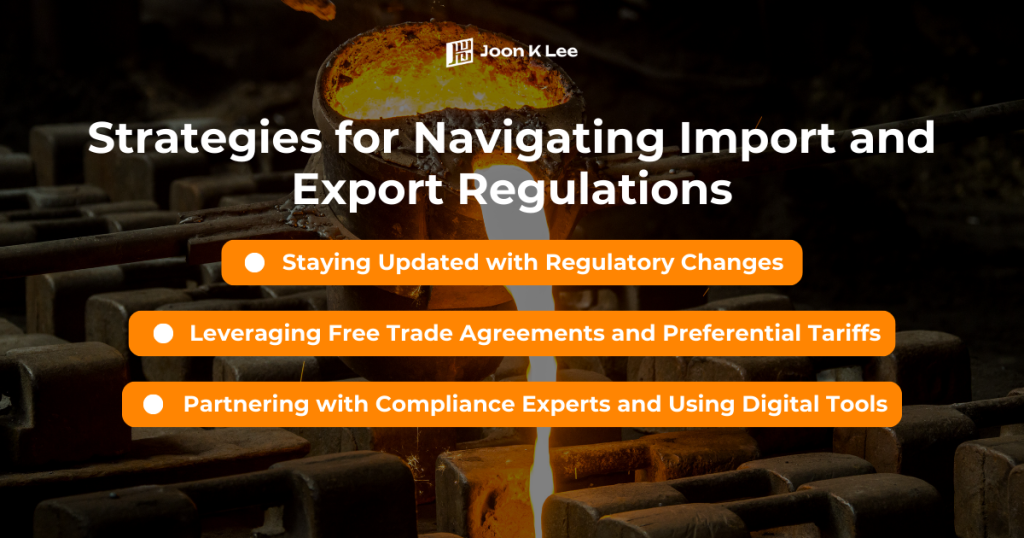
Businesses must adopt proactive strategies and leverage available resources to successfully navigate the complex landscape of import and export regulations for nonferrous metals.
Staying Updated with Regulatory Changes
Regulatory environments are constantly evolving, and staying updated on changes is crucial for businesses involved in global trade. Regulations governing tariffs, duties, quotas, environmental standards, and trade policies can change rapidly, impacting costs and market access. Companies should subscribe to industry newsletters, join trade associations, and regularly consult with customs brokers, legal experts, and trade compliance consultants to stay informed about the latest developments.
Leveraging Free Trade Agreements and Preferential Tariffs
Free Trade Agreements (FTAs) can provide significant advantages for companies trading nonferrous metals by reducing or eliminating tariffs and simplifying compliance requirements. For instance, the Comprehensive and Progressive Agreement for Trans-Pacific Partnership (CPTPP) and the United States-Mexico-Canada Agreement (USMCA) offer preferential tariff rates and clearer compliance guidelines for member countries. Businesses should assess the applicability of FTAs to their trade routes and metal products to take full advantage of reduced tariffs and streamlined procedures.
Understanding the rules of origin is also critical when leveraging FTAs. These rules determine whether a product qualifies for preferential treatment under an FTA based on where it was produced or its components were sourced. Accurate documentation and certification of origin are essential for benefiting from these agreements.
Partnering with Compliance Experts and Using Digital Tools
Navigating import and export regulations often requires specialized knowledge and experience. Partnering with trade compliance experts, customs brokers, and legal advisors can provide valuable guidance on managing documentation, tariffs, and customs procedures. These professionals can help identify potential risks, meet all regulatory requirements, and assist with complex customs clearance processes.
Additionally, digital tools and software platforms can streamline compliance management by automating tariff classification, providing real-time regulatory updates, and managing trade documentation. Such solutions can reduce errors, save time, and ensure businesses comply with all applicable regulations. Implementing these technologies can be a game-changer for companies looking to optimize their global trade operations.
Best Practices for Global Trade Compliance
Navigating the complexities of import and export regulations for nonferrous metals requires a strategic approach that combines staying informed, leveraging trade agreements, partnering with experts, and utilizing digital tools. By understanding the specific regulations that govern different regions and metals, businesses can reduce risks, optimize their supply chains, and maintain a competitive edge in the global market.
Traders and companies involved in the metals industry must adopt best practices in trade compliance. This includes maintaining accurate and up-to-date documentation, understanding the impact of tariffs and quotas, and staying proactive in responding to regulatory changes. Companies should also prioritize environmental compliance, particularly in regions with stringent standards like the European Union and China, to avoid penalties and maintain good standing in the market.
For those looking to navigate the complex world of nonferrous metal trading more effectively, partnering with a knowledgeable and experienced consultant like Inquivix Technologies can provide the support and expertise needed to succeed. With a deep understanding of global trade regulations and a commitment to sustainable practices, Inquivix Technologies is your trusted partner for optimizing trade operations and ensuring compliance.
Building a Competitive Advantage through Strategic Compliance

Successfully navigating the complex landscape of import and export regulations for nonferrous metals requires a proactive approach. Here are some best practices for businesses aiming to build a competitive advantage in the global metals trade:
- Stay Informed and Agile: Regulatory environments are constantly evolving. It is crucial to stay informed about changes in tariffs, duties, environmental standards, and trade policies. Companies should regularly consult with customs brokers, legal experts, and trade compliance consultants to stay ahead of regulatory shifts.
- Optimize with Free Trade Agreements (FTAs): FTAs offer valuable opportunities to reduce tariffs and simplify compliance requirements. Understanding the rules of origin and leveraging preferential trade agreements can provide significant cost advantages and streamline operations.
- Leverage Technology for Compliance Management: Digital tools and software solutions are becoming essential for managing trade compliance efficiently. Implementing technology for automated tariff classification, real-time regulatory updates, and document management can save time, reduce errors, and ensure compliance.
- Collaborate with Compliance Experts: Navigating the intricacies of global trade regulations often requires specialized knowledge. Partnering with trade compliance experts and legal advisors can provide critical guidance on managing complex documentation, customs procedures, and regulatory changes.
- Engage in Strategic Planning: Effective trade compliance goes beyond paperwork; it involves strategic planning. To ensure smooth and cost-effective operations, businesses should develop comprehensive compliance strategies incorporating regulatory updates, market intelligence, and risk management.
Partner with Experts to Navigate Global Trade Challenges
Staying compliant with international regulations is key to success for businesses involved in the import and export of nonferrous metals. Inquivix Technologies offers comprehensive support for navigating complex global trade regulations, ensuring compliance, and optimizing operations. With our expertise in the nonferrous metals industry and a deep understanding of international trade dynamics, we can help your business stay competitive and thrive in the global market.
Take the Next Step in Trade Compliance Excellence
Partner with Inquivix Technologies to stay ahead of regulatory changes and enhance your global trade strategies. Our team of experts is dedicated to helping you understand and comply with all relevant regulations, leverage trade agreements, and implement innovative solutions for optimized operations. Contact us today to learn more about how we can support your business in the nonferrous metals industry.


Written by Joon K Lee
Owner

Everything You Need To Know About Conversions
Conversion rates are one of the most important indicators you should look…

What are the Best SaaS Tools for Digital Marketers?
Software as a Service, or SaaS, is a cloud-computing software accessed through…