Effective Global Metals Trading Strategies: A Guide to Navigating International Markets
September 2024 / Nonferrous Metal

In the paced realm of the global metal trading industry, players must master the art of maneuvering through international markets to boost profits effectively and stay ahead in the game. Metals such as aluminum, copper, and steel serve as resources driving diverse sectors, including construction, automotive technology, and energy. With the intricacies of trade and fluctuating prices, it’s essential to employ strategic approaches that can swiftly adapt to evolving market dynamics. This handbook explores proven trading strategies, market analysis, and risk mitigation methods to equip you for success in the world of metal trading.
Having strategies in place is crucial for handling risks and making the most of market chances to maintain growth and profitability over time. By the time you finish reading this post you’ll have insights and reliable methods to improve your trading techniques and successfully navigate through the intricate world of global metal markets.
Understanding Global Metals Markets

Metals trading is a vast and intricate field involving various types of metals that serve as raw materials for numerous industries. Understanding the nuances of these markets is essential for any trader. Let’s break down the core elements of global metals markets:
Key Metals and Their Uses
Aluminum and copper are used in industries due to their unique properties, such as lightweight and conductivity, respectively, while steel plays a significant role in construction and manufacturing as it is an alloy of iron and carbon, with nickel and zinc serving important purposes across different sectors to traders can benefit from comprehending the supply and demand dynamics of these metals to predict price fluctuations effectively and strategize accordingly.
Major Global Metal Exchanges
Three key platforms for trading metals include the London Metal Exchange (LME), the Shanghai Futures Exchange (SHFE), and the New York Mercantile Exchange (NYMEX). These markets play a role in setting worldwide metal prices and provide different types of contracts—such as spot trades and futures—that traders can engage with effectively. Sufficient knowledge about these platforms’ operational hours and the variety of contracts is essential for engaging in the international metal market effectively.
Factors Influencing Metal Prices
Numerous elements influence the prices of metals, such as supply and demand dynamics, political situations around the world, changes in currency values, advancements in technology, and regulations related to environmental concerns. For instance, the rise of construction projects in developing nations can create a need for steel and aluminum. Likewise, conflicts among leading metal-producing nations may disrupt the flow of supplies. Result in price hikes. Individuals involved in trading need to stay updated on these factors to make informed choices.
Key Strategies for Metals Trading
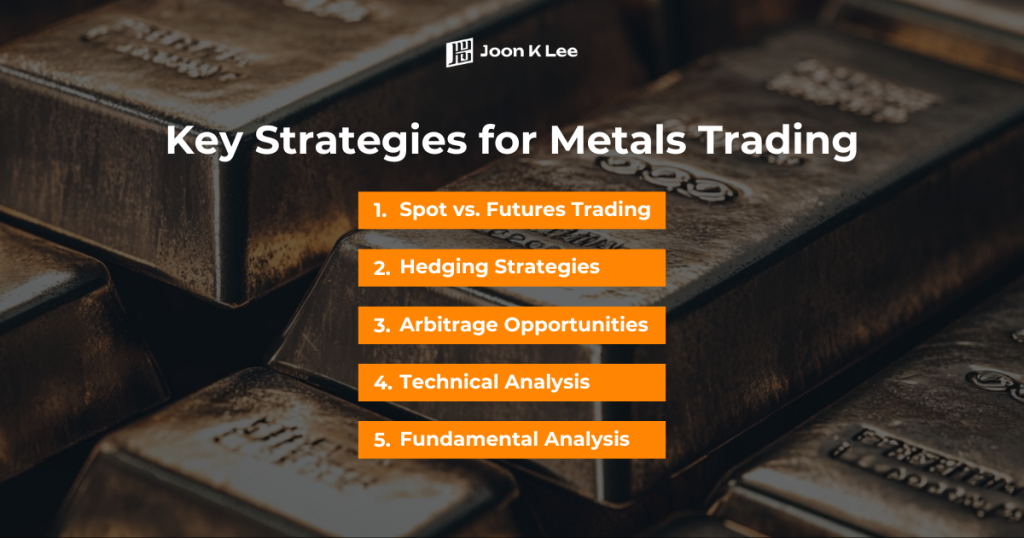
Trading metals effectively in global markets requires a deep understanding of fundamental and technical strategies. Here are some of the key strategies employed by successful traders:
1. Spot vs. Futures Trading
When it comes to Spot Trading. The act of buying or selling a commodity for delivery at the current market rate. It may seem simple on the surface, but it does come with its fair share of risks to consider; this is especially true in times of market volatility where prices can change drastically. Contrastingly, Futures Trading offers traders the opportunity to buy or sell a quantity of metal at an agreed-upon price set for a future date. Engaging in futures contracts serves as a risk management tool by fixing prices in advance and is particularly useful for safeguarding against unfavorable price swings. When choosing between spot and futures trading options is influenced by the trader’s attitude toward risk tolerance, market expectations, and trading objectives.
2. Hedging Strategies
Engaging in hedging plays a role in the world of metals trading by helping to manage and reduce the uncertainties linked to price fluctuations effectively. Traders and businesses commonly employ futures contracts, options, and swaps as part of their risk management strategies. For instance a manufacturer who heavily relies on a supply of copper might opt for copper futures contracts to secure prices and shield themselves from market ups and downs. Likewise, options contracts grant traders the choice. Though not the obligation. To purchase or sell metals at predetermined prices, offering them added flexibility in handling risks.
3. Arbitrage Opportunities
Engaging in arbitrage means taking advantage of price variations for the metal across various markets or exchanges. For example, when aluminum is priced lower at the Shanghai Futures Exchange than at the London Metal Exchange, a trader can purchase it at SHFE. Sell it at LME to benefit from the price gap. However. Arbitrage chances are usually brief. Demand quick responses as well as minimal transaction expenses. This approach is best suited for traders who have access to multiple exchanges and can promptly carry out transactions.
4. Technical Analysis
Traders rely on price information and trading volumes to anticipate future price changes using methods like moving averages or Bollinger Bands to spot trends and possible entry/exit points in the market, such as support/resistance levels and overbuying/selling situations based on tools, like the RSI or Fibonacci retracement levels.
5. Fundamental Analysis
The study of analysis delves into broad economic factors like global economic growth rates and trends in specific industries along with supply chain operations that influence the prices of metals in the market, significantly affecting market sentiment, which is key to traders’ decision-making processes.
Investing in Precious Metals
Benefits and Risks of Investing in Precious Metals

Investment in metals provides various advantages that can improve an investment portfolio’s performance significantly; Gold and silver are commonly regarded as safe assets that offer protection against inflation and market instability. During periods of unpredictability or recessionary pressures in the market environment, almost every business sector of the world leaders & influencers ensure the management of their financial stability while investing their wealth into these precious metals to hedge against potential risks and secure their financial future.
Investment in metals comes with its share of uncertainties and risks, which must be considered carefully before diving headfirst into this market segment. The value of these metals is prone to changes due to various factors like political turmoil worldwide and shifts in supply and demand dynamics coupled with currency fluctuations. These market ups and downs can trigger price alterations that may result in financial setbacks if the market takes a downward turn. Moreover, there are expenses linked to investing in metals, such as management charges, storage fees, and transaction costs, that could impact the overall profitability of your investments.
To manage these uncertainties effectively requires investors to establish a defined investment plan that matches their objectives and comfort with risk-taking matters perfectly well. Grasping the advantages and drawbacks associated with investing in valuable metals empowers investors to make choices and enhance the results of their investments significantly.
Strategies for Diversifying with Precious Metals

Diversifying a portfolio with precious metals can be an effective way to manage risk and potentially enhance returns. Here are some strategies to consider:
- Allocate a Portion of Your Portfolio to Precious Metals: One common strategy involves setting aside a portion of your investments. Usually around 5 to 10%. For precious metals like gold or silver. This investment mix helps protect against rising prices and uncertain market conditions by ensuring stability when the economy faces challenges.
- Invest in a Mix of Precious Metals: Adding a variety of metals to your investment portfolio can help reduce risk exposure by spreading it across different asset types like gold and silver along with platinum and palladium due to their distinct characteristics and market behaviors.
- Use Precious Metals ETFs or Mutual Funds: Investment instruments like Exchange-Traded Funds (ETFs) and mutual funds centered on metals present an accessible avenue to access exposure without the need to buy physical metals directly. The availability of diversification and liquidity in these investment options makes them appealing choices for a range of investors.
- Consider Investing in Precious Metals Mining Stocks: One alternative method to get involved in the precious metals market is through investing in mining company shares rather than directly purchasing metals themselves. These companies engaged in extracting and producing metals may experience growth potential with the escalation of metal prices. Nevertheless, it’s crucial to conduct investigations since mining stocks are vulnerable to operational uncertainties and fluctuations in the market.
By incorporating these strategies, investors can effectively diversify their portfolios with precious metals, managing risk while positioning themselves for potential growth.
Navigating International Trade Regulations
Understanding and complying with trade regulations plays a vital role in the world of global metal trading since each country has its own set of import/export rules and tariffs that can greatly affect the profitability of business transactions in the market.
Overview of Import/Export Regulations and Tariffs
Each nation enforces its rules concerning the shipping and receiving of metals which involve fees like tariffs and duties as well as customs procedures and paperwork demands to comply with regulations fully. For instance, in the U.S., there are charges on steel and aluminum imports under Section 232 that impact how competitively priced foreign metals are in the American market. Within the European Union, certain steel goods from countries such as China face anti-dumping charges to safeguard local industries. Traders must stay informed about these rules to strategize their trading activities.
Key International Trade Agreements and Their Influence on the Metals Market
Various global trade deals influence the metal industry by overseeing trade practices and cutting tariffs or barriers to trade operations, such as the United States Mexico–Canada Agreement (USMCA), the Regional Comprehensive Economic Partnership (RCEP) in Asia, and the trade protocols of the European Union hold sway over trading trends and opportunities, in different regions worldwide These pacts may unveil fresh markets or grant special entry rights but may also set limitations based on their provisions Revisiting and utilizing these agreements could provide traders with a strategic advantage.
Importance of Compliance and Understanding Regional Regulations
Failure to follow trade rules may result in significant penalties and delays in shipping or exclusion from particular markets Traders should allocate resources towards compliance infrastructure, such as keeping up to date with regulatory modifications preparing accurate documentation, and potentially employing compliance professionals or advisors By grasping and abiding by local regulations traders can prevent expensive errors and concentrate on enhancing their trading activities.
Trading on the London Metal Exchange
Overview of the London Metal Exchange
The London Metal Exchange (LME) is a player in the worldwide market for nonferrous metals trading since its founding in 1877.The LME offers a clear and effective platform for trading various metals like copper, aluminum,zinc, and nickel. It plays a role, in global metal commerce by providing futures contracts,options contracts and spot market trading products.
The LME stands out with its settlement date system that enables trading and contract settlements to take place smoothly and efficiently—a feature that appeals to traders and investors alike due to the sizable lot sizes involved here at this platform of choice for many, in the industry worldwide.
The importance of the LME goes beyond trading as it plays a role in determining prices and managing risks for the metals sector. Through its pricing system the LME promotes fair market behavior and instills trust among participants. Traders interested in nonferrous metals trading must grasp the nuances of the LME to navigate the challenges of the global metals market effectively.
By using the LMEs trading platform allows traders to explore a variety of options in the worldwide metals market and make well informed choices relying on trustworthy market information and patterns.
Leveraging Technology and Data Analytics

The emergence of technology has transformed the metals trading sector into an efficient and information-driven field.A competitive edge can be gained by using cutting-edge technologies such as Artificial Intelligence (AI), Machine Learning (ML), and big data analysis.
1. The Role of AI, Machine Learning, and Big Data in Metals Trading
Intelligence and machine learning algorithms have the capability to analyze large volumes of data in order to recognize patterns and forecast upcoming price changes in the financial markets effectively. These advanced technologies are able to examine market sentiments along with price movements and economic indicators to offer practical advice. To illustrate further with an example, trading platforms powered by AI can automatically make buying and selling choices based on set rules and algorithms without being swayed by biases that often influence human traders. Moreover, machine learning models can undergo training to detect arbitrage opportunities and enhance trading strategies for execution.
2. How Technology Helps in Forecasting Trends, Automating Trading Decisions, and Managing Risks
Analyzing data from sources like news outlets and social media platforms allows big data analytics tools to predict market trends accurately. Traders use this information to make decisions and predict market movements effectively. Algorithmic trading systems automate trades based on criteria without human involvement. These systems can monitor markets at once and execute trades rapidly to manage risks efficiently. By automating these processes, traders can enhance efficiency. Avoid missing out on potential opportunities.
3. Case Studies or Examples of Companies Successfully Using Technology in Their Trading Strategies
Numerous companies have effectively incorporated technology into their trading approaches. For instance. Goldman Sachs applies AI. Machine learning improves its metals trading activities by spotting lucrative trading prospects and mitigating risks. In a vein. Trafigura,. A leading global commodity trading company. Leverages analytics to streamline its supply chain and trading strategies. Showcasing the potential for technology to revolutionize trading practices.
Risk Management in Global Metals Trading
Given the inherent volatility and uncertainty in global metals trading, effective risk management is vital. A well-defined risk management framework helps traders minimize potential losses and maximize gains.
Identifying Common Risks in Metals Trading
There are dangers that can impact the trading of metals, like price fluctuations and political unrest or credit and operational risks to consider when dealing with metal trading activities in the market space, which can be quite unpredictable due to sudden shifts in demand and supply dynamics or global events affecting currencies as well as geopolitical tensions that may interrupt supply chains and lead to market access being compromised along with the potential threat of cyber attacks causing delays, in logistics operations when it comes to trading metals effectively and securely.
Risk Mitigation Strategies
Strategies to reduce risks effectively include diversifying investments across sectors and assets like metals or regions to minimize the impact of any single risk factor on the performance of your portfolio. For instance, a trader could invest in a mix of copper and aluminum to maintain an investment portfolio. Additionally, insurance can be used to manage risks associated with logistics, storage, and political uncertainties. Implement stop loss orders well to safeguard against substantial losses by selling positions automatically when prices hit predetermined levels.
The Importance of a Well-Defined Risk Management Framework
Creating a risk management framework involves recognizing risks and evaluating their possible effects before applying suitable risk reduction strategies. Continuous monitoring and periodic assessments are crucial to adapt to market changes. For example, traders need to evaluate their market exposures and modify their tactics as needed. Following an approach to managing risks helps safeguard against losses and fosters trust with stakeholders.
Building Strong Relationships with Suppliers and Buyers

Developed and lasting connections with suppliers and customers play a role in achieving success in the international metals trading industry. Fostering trustworthiness in relationships and guaranteeing consistent supply chains while nurturing strategic alliances can offer substantial competitive benefits.
Importance of Networking and Building Trust in the Metals Trading Industry
Building trust and dependability are pillars of a thriving trading enterprise—especially in the realm of metals trading, where deals encompass substantial quantities and financial commitments of note. Creating trust among suppliers and customers is paramount through communication, transparent transactions, and a proven history of upholding agreements. This foundation greatly contributes to cultivating a reputation within the industry. Traders who focus on nurturing relationships frequently enjoy terms of preference for sought-after goods and increased market prospects.
Strategies for Maintaining Strong Relationships
Maintaining robust relationships requires continuous effort. This can be achieved by being responsive to partners’ needs, providing accurate market information, and being flexible with payment terms and delivery schedules when possible. Building relationships also involves cultural understanding, especially in international markets. For example, in Asian markets, long-term partnerships and trust-building activities such as face-to-face meetings and participating in industry events are highly valued. Additionally, ethical trading practices and maintaining a high level of professionalism can reinforce strong business ties.
Leveraging Global Networks to Gain a Competitive Edge
Traders who thrive in their business connect with networks to find top-quality products at great prices and stay informed about market trends and advancements in the field. Involvement in associations and attendance at global events and trade discussions offer valuable perspectives and access to fresh possibilities. These connections enable traders to spot collaborations, gain insight into market fluctuations, and stay informed on regulatory shifts impacting their trading methods.
Future Trends in Metals Trading

The world of metals trading is always changing due to advancements in technology and shifts in regulations and consumer preferences. It’s essential for traders to stay updated on these trends to seize opportunities.
Green Metals and Sustainable Trading Practices
The metals industry is undergoing changes due to the increasing focus on sustainability practices like using eco-friendly materials such as aluminum and recycling metals with minimal environmental impact, gaining popularity among buyers and suppliers alike. Companies now place importance on partnering with suppliers who follow sustainable methods by reducing emissions and waste generation as influenced by regulations and consumer preferences for green products. Traders who integrate sustainability into their sourcing strategies can establish themselves as trusted collaborators within the industry.
The Impact of Global Policies on Carbon Emissions and Metals Trading
Global strategies for carbon emissions are impacting the trading of metals as well. They are implementing policies such as the European Unions Carbon Border Adjustment Mechanism (CBAM) which seeks to levy taxeson imports that’re carbon intensive including select metals. These regulations might impact the market competitiveness of metals from areas with laxer rules. Traders need to keep themselves updated about these regulations and factor them into their pricing and sourcing tactics to stay competitive in the market.
Emerging Markets and Opportunities for Growth
Growing economies like those in Southeast Asia, Africa, and Latin America offer opportunities to trade metals. As industrialization and urban development quicken in these areas, the need for metals such as steel, copper, and aluminum is soaring. For instance, Southeast Asia is evolving into a center for manufacturing vehicles (EVs), spurring the request for lithium, cobalt, and nickel. Traders who spot these burgeoning markets ahead of time and set up distribution networks are set to profit from the growth prospects.
Crafting Your Strategy for Success
Mastering the intricacies of the metals trading arena demands a mix of careful planning, industry insight and solid alliances in place. Having a grasp of trading tactics such as spot and futures trading, hedging strategies, and arbitrage empowers traders to navigate risks adeptly and seize market chances. Employing technology and data analysis not only boosts decision-making but also keeps one ahead in tracking market shifts efficiently.
Achieving success in the metals trading sector goes beyond figures and tactics—it hinges on establishing trust and nurturing strong relationships, with both suppliers and buyers alike. As the industry progresses amidst changing regulations and sustainability initiatives traders need to adjust and enhance their methods to remain competitive.
In order to stay competitive and succeed in the market race you should keep an eye on market trends regularly. Embrace technological advancements while also forming strong partnerships with reliable allies along the way. For individuals seeking to enhance their trading tactics or seeking insights into global markets exploration and trading opportunities abroad can rely on the expertise of Inquivix Technologies, for guidance and assistance.


Written by Joon K Lee
Owner

Everything You Need To Know About Conversions
Conversion rates are one of the most important indicators you should look…

What are the Best SaaS Tools for Digital Marketers?
Software as a Service, or SaaS, is a cloud-computing software accessed through…