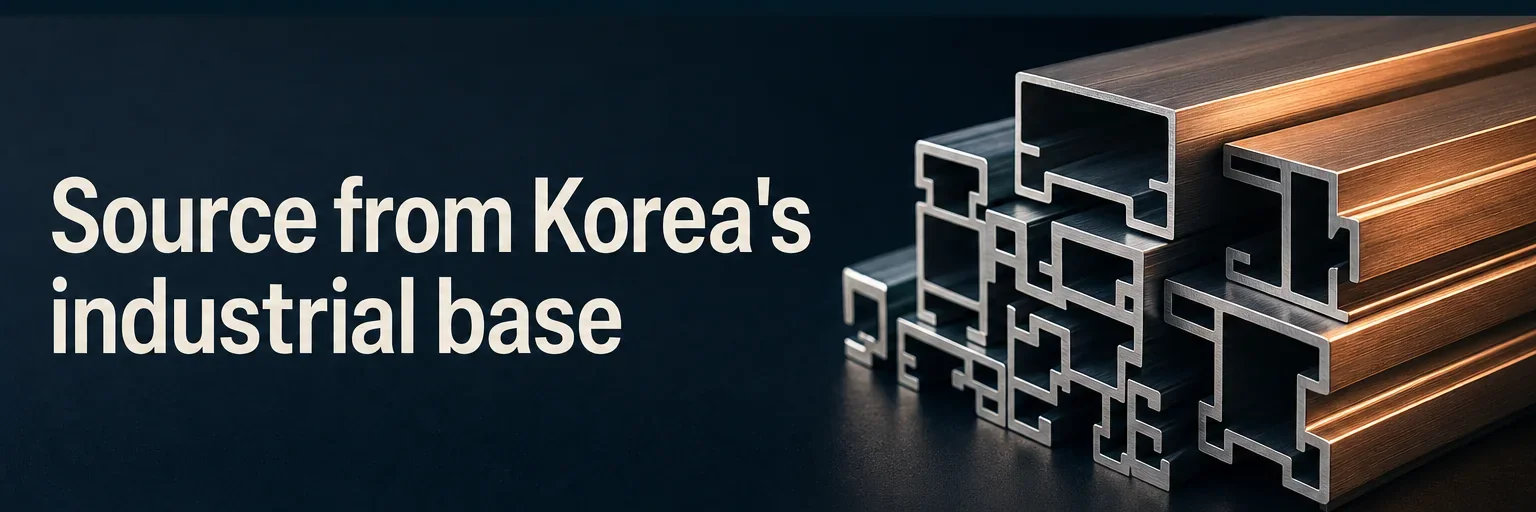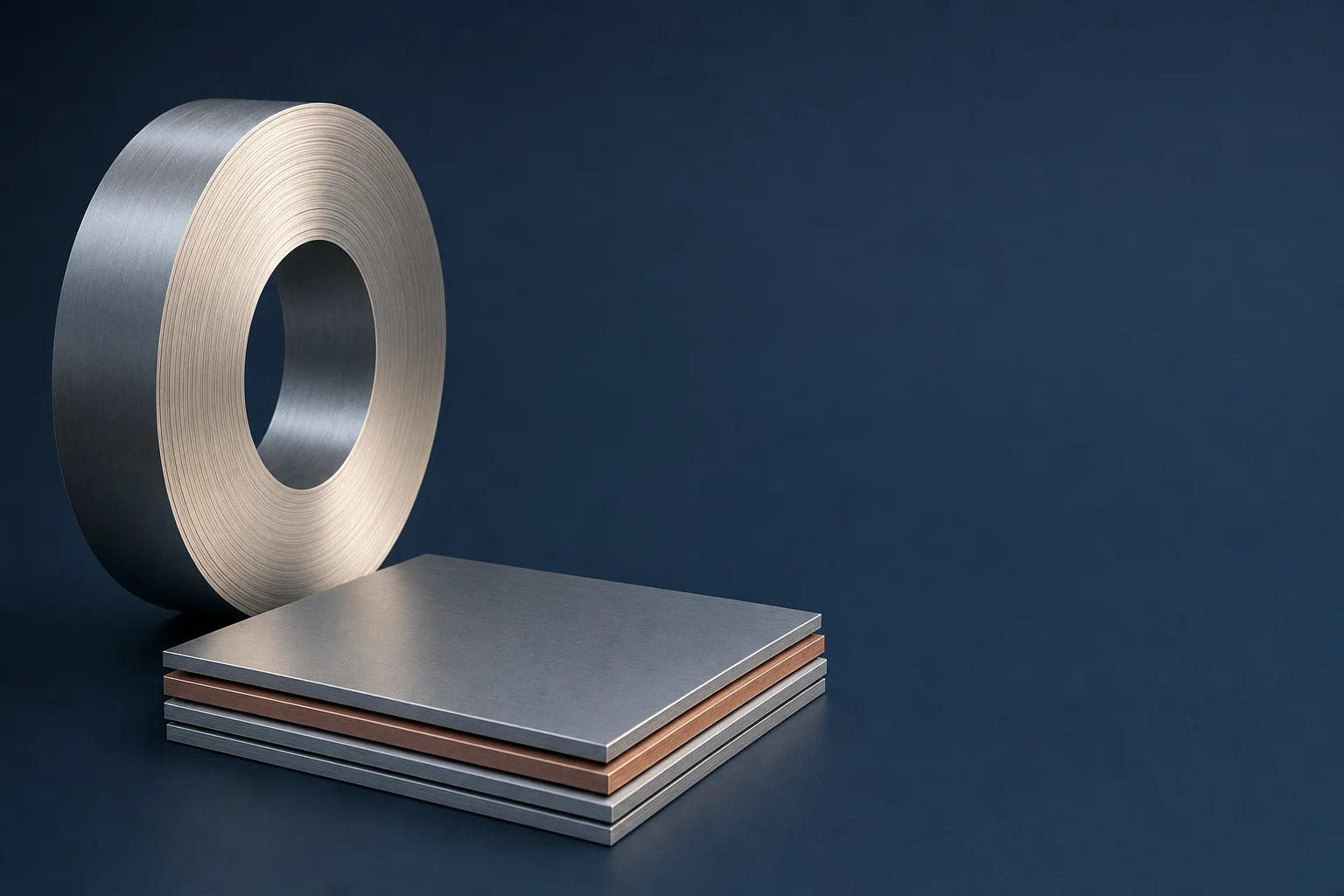
Korean aluminum suppliers of flat rolled product cluster around a small number of real rolling mills. Novelis Korea leads on capacity, Choil Aluminum leads the independents, and a second tier covers circles and foil. Korea rolls imported metal, so a first order turns on alloy, temper, coating, and documentation.
Start with the overview of Korea’s aluminum industry, and the guide to sourcing aluminum extrusions from Korea for profiles.
Data current as of September 2026.
Which Korean Aluminum Suppliers Actually Roll Sheet and Coil?
Fewer than a supplier directory suggests. Most Korean firms listing sheet and coil are traders, service centers, or fabricators buying coil and cutting it, and a service center cannot change an alloy, a temper, or a cast.
Novelis Korea is the largest roller in the country, with Yeongju and Ulsan at a combined capacity of roughly one million tons a year since a 2013 expansion (Novelis, 2013). Yeongju holds ASI certification, and Ulsan Aluminum, a Kobe Steel joint venture, makes automotive and specialty sheet and lists IATF 16949, ISO 9001, and ASI (Novelis, 2026).
Choil Aluminum, Gyeongsan headquartered and KOSPI listed, states 160,000 metric tons of annual capacity and calls itself the only Korean company running a direct chill line and a continuous casting line at once (Choil Aluminum, 2026), and rolls strip, coil, sheet, and battery cathode foilstock.
Daeho AL in Daegu rolls coil, sheet, and circles for EV, appliance, and auto parts customers, stating 78,000 tons a year of sheet (Daeho AL, 2026). Gwangyang Aluminum Industry, the Korean subsidiary of China’s Henan Mingtai Aluminum (AlCircle, 2018), was established in Gwangyang, Jeollanam-do in December 2019 and runs a hot mill, cold mills, and finishing lines, making sheet, coil, checker plate, and foilstock in the 1xxx, 3xxx, and 5xxx families (Gwangyang Aluminum, 2026). Commerce files it as Gwangyang Aluminum Industries.
Korea rolls no heavy aerospace plate. No Korean mill publishes hot mill capability in the thick 2xxx and 7xxx gauges airframe and vacuum chamber buyers specify, so that plate arrives through importing distributors and stockists. Choil describes the hot mill, cold mill, and cutting facilities it added from 2016 as producing alloy sheet (Choil Aluminum, 2026), a different envelope.
What Alloys, Tempers, and Dimensions Can Korean Mills Hold?
Coverage centers on 1xxx, 3xxx, and 5xxx for general industrial and packaging work, 5xxx and 6xxx automotive body sheet from Novelis Korea and Ulsan Aluminum, and 1xxx and 8xxx for foil. Inquivix Technologies stocks 1100 aluminum coil in that first group. Mills roll to KS D 6701 (Korean Standards Association) and cross-reference ASTM B209, EN 485-2, or JIS H 4000 on request, and that cross-reference belongs in the purchase order.
Write the temper next to the alloy, since in 1xxx, 3xxx, and 5xxx the strength comes from work hardening. EN 515 (2017) defines the designations: O is annealed, H1x is strain hardened only, H2x is strain hardened then partially annealed, H3x is strain hardened and stabilized against age softening. 3003-H14 and 3003-H24 reach comparable strength by different histories and behave differently under a press. 6xxx body sheet is heat treatable, ships in T4, and reaches final strength in the paint bake, so name the T temper there.
Choil casts strip at 8 mm thickness and 1,750 mm maximum width on ten continuous casters supplied by Pechiney of France, then cold rolls it into foil, cathode material, and automotive product (Choil Aluminum, 2026). Novelis publishes no gauge or width table for Yeongju, so ask that mill for the cold rolled gauge floor and maximum width on its direct chill route.
Specify thickness tolerance, width tolerance, flatness in I-units, and edge condition, since a mill edge and a slit edge differ. State the inner diameter your line runs: 508 mm and 610 mm are both standard, and heavier gauge arrives on the larger core. State outside diameter, coil weight, and orientation, since eye-to-sky and eye-to-wall coils need different handling. Agree interleaving paper or PE film on anodizing quality and coated coil, and require ISPM 15 treated wood. Container payload sets the last limit: a 20 ft dry box runs to roughly 28,200 kg against a 30,500 kg gross rating (iContainers, 2026), capping coil weight before the uncoiler does.
Surface quality needs written acceptance limits: the surface grade, one-side-bright against both-sides-bright, whether residual rolling oil film is acceptable on delivery, and limits for edge wave, coil breaks, roll marks, and scratches, with the percentage of coil length you accept as off-spec at head and tail. Settle whether the mill prices the full coil or the accepted length.
What Coating and Surface Finish Options Exist?
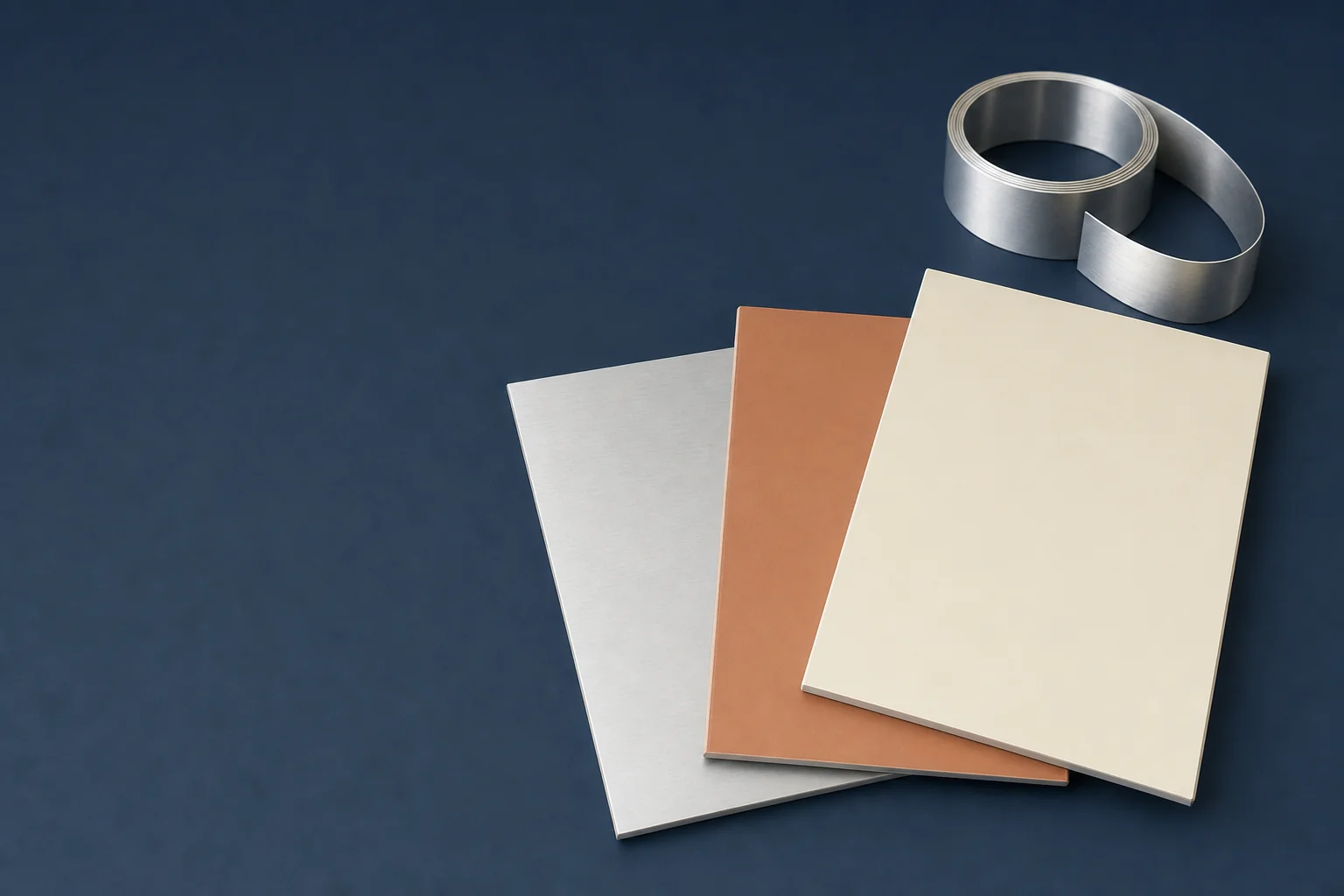
Korean flat rolled product comes mill finish, coil coated, anodizing quality, laminated, or embossed. Coil coating needs a written specification, because the paint system sets warranty exposure outdoors.
AAMA merged with the Insulating Glass Manufacturers Alliance on January 1, 2020 into the Fenestration and Glazing Industry Alliance, so these specifications now publish as FGIA under the AAMA numbers (FGIA, 2020). AAMA 2603 is the baseline, covering pigmented organic coatings on polyester and modified polyester resin, and it is the default when nobody names one. AAMA 2604 covers roughly 50 percent PVDF systems on a five year benchmark, and AAMA 2605 covers 70 percent PVDF on ten years. Europe calls up EN 1396, covering coil coated aluminium sheet and strip up to 3.0 mm (EN 1396:2023).
Two lines below the resin decide performance. Name the pretreatment, because chromate and chrome-free conversion coatings behave differently and several destinations restrict hexavalent chrome. Name the acceptance tests: T-bend flexibility to ASTM D4145, cross-hatch adhesion to ASTM D3359, and reverse impact to ASTM D2794.
Ask who applies the paint. A mill coating in house schedules against its own rolling program, and one subcontracting to an independent coater adds a transfer, a queue, and a second set of quality records, which decides lead time, warranty, and liability when color drifts.
Coil-to-coil color variation inside one order is the recurring dispute. Control it with a delta E tolerance against a signed master panel agreed before the first coil runs, and keep your own copy. Settle the back coat separately, since the reverse is often a wash coat that shows through on a formed part. Anodizing quality sheet, usually 5005, carries different chemistry control.
What Minimum Order Quantities Should You Expect?
Minimums follow the cast lot and the coil. No Korean mill publishes a policy. The tonnages and calendars here are operator judgment.
A direct chill cast runs to tens of tons, so no mill will cast a non-standard alloy for a few tons. For a standard alloy in a running gauge the practical minimum is one production coil. Continuous cast coils typically run a few tonnes each, direct chill coils run substantially heavier, and mills commonly set the working floor at a full container load per alloy and gauge. Coating adds a second minimum, because a coating line changes color in batches.
Ask for three numbers in the quotation: minimum per alloy and gauge, per coating color, and per shipment. Buyers below the minimum work through a trading house or service center that buys full coils and sells cut lengths at a higher price per kilogram. Inquivix Technologies supplies Korean aluminum coil in specific alloys at distributor volumes.
Build the calendar in legs. Rolling a running gauge takes roughly four to eight weeks, a new alloy waits for a cast and runs eight to fourteen, and coating adds two to four weeks. Ocean transit from Busan adds about two weeks to the US West Coast and five to seven to Northern Europe. Duty, origin rules, and entry filings for that shipment are covered in the guide to importing aluminum from Korea.
What Certification and Test Documentation Should You Demand?
Specify the certificate type in the purchase order and require it before the vessel sails. EN 10204 (2004) defines the inspection documents: type 3.1 comes from the manufacturer’s inspection representative independent of production, and type 3.2 adds validation by a second party. For flat rolled product, 3.1 is the practical ask; 3.2 costs more, takes longer, and suits regulated end uses such as pressure equipment.
The certificate should carry the cast or lot number, chemistry element by element, mechanical properties in the delivered temper, and measured dimensions. Two clauses make it usable: it must reference the actual coil numbers shipped, and it must state sampling frequency, per coil or per lot. ASTM B209M calls for one sample from each end of each parent coil or parent plate, capped at one sample per 1,000 kg of sheet or 2,000 kg of plate in a lot of one alloy, temper, and thickness. Cite B209M, since B209 in inch-pound units sets 2,000 lb and 4,000 lb. B209M also lets producer and purchaser agree other sampling procedures, and that clause is the purchase order lever.
United States importers report primary and secondary country of smelt and country of most recent cast under U.S. Customs and Border Protection guidance effective June 28, 2025, and filing unknown draws the 200 percent Section 232 duty applied to Russian aluminum (GHY International, 2025). Korea smelts no primary metal, so make all three declarations a purchase order condition. The extrusions guide covers the mechanics.
How Do You Qualify a Korean Flat Rolled Supplier?
Qualification runs on samples and an audit. Ask for the mill’s current certificate list, since brochures do not show expiry dates and a lapsed IATF 16949 certificate reads exactly like a live one. ISO 9001 is the floor, IATF 16949 covers automotive, ASI applies where recycled content is in scope.
Order the trial at production width and gauge, because formability, springback, and paint adhesion change with width. A trial coil comes off a real cast, mills charge for it, and the purchase order has to name who owns the trial scrap and whether the trial tonnage counts toward the first order minimum.
Automotive and battery programs add a run-at-rate. PPAP runs on production-width coil at line speed, so the trial coil quantity the mill commits to and the date it can cast it set the calendar. Get that date in writing.
Below a mill’s floor a Korean trading house or service center becomes your counterparty, and the criteria in the guide to evaluating Korean partners and intermediaries apply.
What Trade Exposure Applies to Korean Sheet and Coil?
No United States antidumping order is in force on common alloy aluminum sheet from Korea, and Section 232 is the live cost line.
Scope decides whether this touches your part. Commerce defines common alloy aluminum sheet as flat rolled aluminum 6.3 mm or less in thickness and greater than 0.2 mm, in coils or cut to length, regardless of width, in a 1xxx, 3xxx, or 5xxx series alloy, including clad sheet on a 3xxx core (Commerce scope, Federal Register, 2021). Substrate thicker than 6.3 mm sits outside that scope, which is why it became the circumvention vector.
Commerce closed the antidumping investigation on March 8, 2021 with a final negative determination at a 0.00 percent margin. Origin then drew the scrutiny, and on July 13, 2023 Commerce opened a circumvention inquiry under the antidumping and countervailing duty orders on common alloy aluminum sheet from China, published February 6 and February 8, 2019 (Federal Register, 2023), into Korean sheet rolled by Gwangyang Aluminum Industries, the same mill, from Chinese substrate thicker than 6.3 millimeters supplied by Henan Mingtai. The petitioner withdrew on November 2, 2023 and the rescission published on December 12, 2023 with no finding on the merits, so the risk stays live. Ask where your substrate was cast and hot rolled, in writing.
Section 232 applies at 50 percent on aluminum articles of HTSUS chapter 76, where sheet, plate, and coil classify, on full customs value since April 6, 2026, and KORUS grants no exemption (C.H. Robinson, 2026). Classification stays live, because the rate follows the annex rather than the article or derivative label: Annex I-A carries 50 percent and covers chapter 72 and most goods in chapters 73, 74, and 76 including derivatives, while Annex I-B derivatives carry 25 percent (C.H. Robinson, 2026). Goods under 15 percent aluminum by weight fall outside Section 232, an exclusion unavailable to chapters 72, 73, 74, and 76 (GHY International, 2026). The proclamation of June 1, 2026 pulled aluminum lithographic plates into derivative coverage (C.H. Robinson, 2026), so confirm where cut-to-length blanks, circles, and laminated panels sit. European buyers face the EU Carbon Border Adjustment Mechanism, definitive since January 1, 2026 (International Carbon Action Partnership, 2026).
Frequently Asked Questions
Are Korean aluminum sheet imports subject to US antidumping duties?
No order is in force. Commerce published a final negative determination on common alloy aluminum sheet from the Republic of Korea on March 8, 2021, calculating a 0.00 percent dumping margin for Novelis Korea Limited and Ulsan Aluminum Limited over a 2019 period of investigation. Section 232 still applies at 50 percent.
What is the minimum order for aluminum coil from a Korean mill?
Minimums follow the cast lot and the coil, and no Korean mill publishes a policy. For a standard alloy in a running gauge, one production coil is the practical floor, and mills commonly set that floor at a full container load per alloy and gauge. These figures are operator judgment.
What is the lead time for aluminum coil from a Korean mill?
Build it in three legs. Rolling a standard alloy in a running gauge takes roughly four to eight weeks, and a new alloy waits for a cast, pushing that to eight to fourteen. Coating adds two to four weeks. Ocean transit from Busan adds two weeks to the US West Coast and five to seven to Northern Europe. These ranges are operator judgment.
Specifying a Korean Flat Rolled Order
Name the alloy, the temper, the governing standard, the tolerance class, the coil dimensions and orientation, the coating specification, and the certificate type before asking for a price, then verify where the substrate was cast.
Aluminum coil, sheet, plate, and foil in specific alloys is handled by Inquivix Technologies. To discuss a Korean flat rolled requirement, contact joon@joonklee.com or the contact page.