Why Korea is Leading the Hydrogen & Ozone Technology Revolution
March 2025 / Industrial Trade & B2B Partnerships in Korea
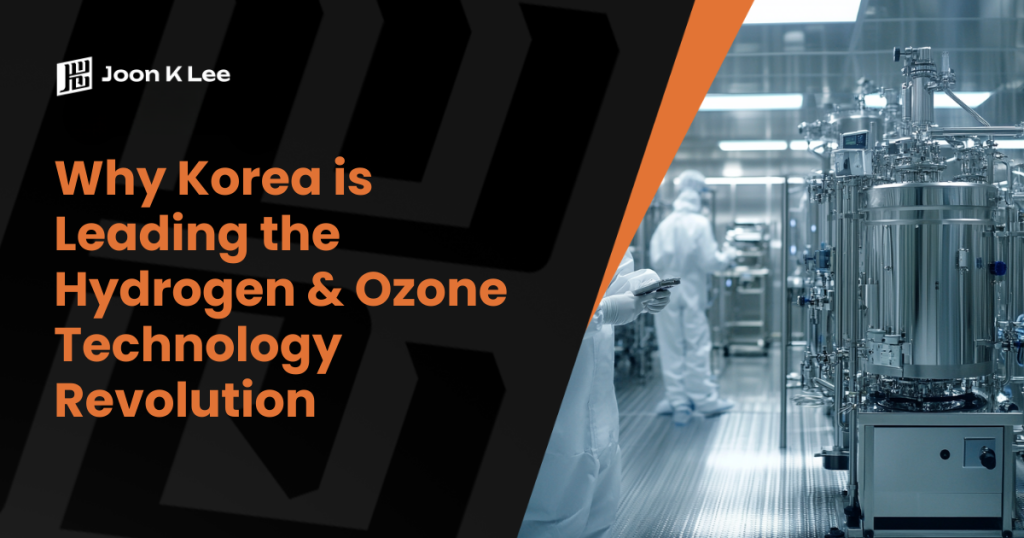
Table of Contents
Clean Tech, Dirty Work: The Hidden Power of Gas in Chipmaking
Ever thought about how your smartphone—or that shiny new laptop—gets made? Not just the design, but the tiny, mind-bendingly complex chips inside?
Now imagine this: building one of those chips is like performing surgery. And not just regular surgery—robot-assisted, nanometer-level, zero-dust, zero-bacteria kind of surgery. That’s where hydrogen and ozone gases come into play. They’re not household names, but in the semiconductor world? They’re the unsung heroes.
South Korea, already a heavyweight in chip production thanks to giants like Samsung and SK Hynix, is now leading the charge in another direction—revolutionizing how hydrogen and ozone technologies are used in semiconductor manufacturing. And it’s not just about keeping things clean. It’s about pushing the limits of what’s physically possible on silicon wafers the size of your hand.
The Rise of Hydrogen & Ozone Tech in Korea
Let’s zero in on the keyword here: the rise of hydrogen & ozone tech in Korea. This isn’t just a trend—it’s a full-blown industrial transformation.
In semiconductor fabrication (or “fab” speak), hydrogen and ozone aren’t just useful—they’re essential. These gases are used in ultra-precise stages like wafer cleaning, surface treatment, etching, and annealing. That’s a fancy way of saying: they prepare, clean, and perfect the tiny surfaces where billions of transistors will live.
Why Korea? Because the country saw the writing on the wall early. After the 2019 Japan-Korea trade spat that restricted key gas exports, Korea doubled down on its domestic gas tech ecosystem. That meant pumping serious R&D money into hydrogen generation, purification, and ozone production tailored specifically for chip fabs.
Today, Korean gas suppliers like SK Materials, TEMC, and Iljin Gas are no longer playing catch-up—they’re setting standards. And it’s all happening in parallel with Korea’s push for semiconductor dominance.
Hydrogen in the Fab: Tiny Gas, Big Job
So, what exactly does hydrogen do in a chip factory?
A lot more than you’d think.
In fabs, hydrogen is used in annealing (heating wafers to remove defects), surface cleaning, and as a carrier gas to safely move other process gases around. But here’s the kicker—it has to be ultra-high purity hydrogen (UHP). We’re talking 99.9999% pure. Even a speck of impurity could ruin an entire wafer batch worth thousands of dollars.
Samsung, for example, uses UHP hydrogen in its extreme ultraviolet (EUV) lithography process, which enables it to etch impossibly small features onto chips. And since every atom matters, Korea’s hydrogen infrastructure isn’t just about volume—it’s about precision.
Korean firms are now investing in closed-loop hydrogen recycling systems, where hydrogen used in one step is purified and reused in another. It’s cleaner, cheaper, and aligns perfectly with Korea’s broader green hydrogen ambitions.
Ozone: The Unsung Hero of Wafer Cleaning
Now let’s talk about ozone—yes, the same gas we worry about in the atmosphere, but used here in a totally different way.
In chipmaking, ozone is a super-clean oxidizing agent, meaning it reacts quickly with organic matter and residues on wafers. It’s widely used in dry cleaning processes that replace harsh chemicals. Think of it like a high-end dry shampoo, but for silicon.
What makes ozone amazing in this setting?
- It leaves no chemical residue
- It reacts instantly, requiring less rinse
- It’s more environmentally friendly compared to older methods
Korean companies like TEMC and SE Corporation are innovating in ozone gas generation equipment that delivers just the right concentration for fabs. And with increasing global demand for eco-friendly chipmaking, Korea’s early investment in ozone is paying off.
Fun fact? Korea also saw a boom in ozone use during COVID—for air sterilization and medical-grade cleaning—which fast-tracked development for higher-purity industrial ozone generators.
Supply Chain Strength: Korea’s Domestic Gas Ecosystem
One of the biggest shifts over the last five years has been Korea’s move from dependency to self-sufficiency in gas supply chains.
Remember the 2019 incident when Japan restricted exports of fluorinated polyimides and high-purity hydrogen fluoride? That was a wake-up call for Korea’s tech industry. The government and private sector moved fast to secure alternative sources and build out a domestic ecosystem.
Today, you’ve got players like:
- SK Materials: Specializes in specialty gases like UHP hydrogen and nitrogen trifluoride
- Hyosung: Building infrastructure for green hydrogen
- Iljin Gas: Developing advanced transport systems for hydrogen
- TEMC: Leading in ozone generators and delivery systems for chip fabs
Korea’s advantage lies in its tight integration between gas suppliers, chipmakers, and cleanroom engineers. The whole value chain is optimized for speed and collaboration. And now that hydrogen and ozone are more than just utility gases—now that they’re strategic assets—Korea is treating them like gold.
National Policy: Hydrogen & Semiconductor Go Hand-in-Hand
If there’s one thing Korea doesn’t do halfway, it’s national strategy. And when it comes to semiconductors and clean energy, the Korean government is playing 4D chess.
Back in 2020, Korea unveiled its Hydrogen Economy Roadmap, aiming to make hydrogen a cornerstone of its green future. Around the same time, the K-Semiconductor Strategy dropped—an ambitious plan to invest over $450 billion USD by 2030 in building the world’s most advanced chip ecosystem.
Coincidence? Not at all.
Hydrogen isn’t just part of Korea’s energy plan—it’s now fully integrated into its industrial policy. The government is:
- Funding hydrogen clusters near fab facilities (like in Yongin and Pyeongtaek)
- Offering tax breaks for companies investing in hydrogen infrastructure and high-purity gas tech
- Subsidizing R&D for UHP hydrogen, plasma-enhanced ozone systems, and smart delivery platforms
In short, Korea’s treating hydrogen and ozone technology like national security priorities—and that’s setting them up for long-term dominance.
Korea vs the World: Leading the Purity Race
Let’s zoom out a little—because this isn’t just a Korea story. It’s a global competition.
While Taiwan (hello, TSMC) leads in chip foundries and the US throws billions at reshoring fabs, Korea is pulling ahead in a more niche but critical area: gas purity and delivery systems.
Here’s how it stacks up:
| Country | Strength | Gas Tech Status |
| Korea | Process innovation, vertical integration | Leading in UHP hydrogen and ozone delivery |
| Taiwan | EUV scale, mass production | Relies more on imported gases |
| Japan | Precision materials | Still dominates in fluorinated gases but less agile post-2019 |
| USA | Infrastructure buildout | Catching up in domestic production, lags in UHP delivery |
Korea’s edge is speed and flexibility. Instead of importing from foreign suppliers, they’re building local, partnering with startups, and investing in next-gen delivery platforms that are more compact, automated, and energy-efficient.
Korea isn’t trying to win the chip war with just fabs. They’re winning it with the invisible stuff—gases, purity systems, and the tech that makes the fabs work better.
Challenges & Future Outlook
Alright, it’s not all perfect. Hydrogen and ozone come with a few speed bumps—some of them serious.
Hydrogen, for example, is notoriously flammable. Managing and transporting it safely in high-pressure, ultra-clean environments isn’t exactly child’s play. Korean firms are now investing in real-time leak detection, AI-based flow systems, and next-gen pipelines to keep everything secure.
Ozone, while effective, is also a toxic gas at higher concentrations. Balancing its sterilizing power without creating workplace hazards is a constant engineering challenge.
Then there’s the green hydrogen vs gray hydrogen debate. Right now, much of the hydrogen used in fabs comes from fossil fuel processes (gray hydrogen). But Korea’s betting big on green hydrogen made from renewable energy, and companies like Hyosung are working to scale that up.
The future? Expect AI-assisted gas management, smarter fab designs, and even modular hydrogen delivery systems that plug directly into fab lines like LEGO pieces. It’s not just about making things cleaner—it’s about making the cleaning tech smarter.
So, What Does This Mean for the Industry?
It means that Korea’s not just manufacturing semiconductors—they’re reinventing how they’re made.
By developing high-purity hydrogen and ozone tech in-house, Korea is:
- Increasing chip yields
- Lowering production risks
- Gaining exportable IP in clean process tech
- Becoming indispensable to global chip clients who care about ESG and precision
We often talk about Moore’s Law—the idea that chips keep getting smaller and more powerful. But here’s the part we forget: you can’t shrink chips without shrinking your margin for error. And that margin? It’s where gases like hydrogen and ozone do their magic.
Korea is filling that gap with tech leadership that’s largely invisible to the outside world—but absolutely critical to the inside of every processor you use.
Let’s Keep the Conversation Going
So now you know—hydrogen and ozone aren’t just buzzwords. They’re the invisible backbone of Korea’s semiconductor rise.
Have you ever thought about what’s behind the chips in your phone, your car, your laptop? Do you think these clean tech innovations will become Korea’s next global export boom?
Drop your thoughts below or connect with me—I’d love to hear what you think about the hidden tech powering the future.

FAQs
South Korea’s leadership in this space comes from a combination of strategic investments, robust supply chains, and a focus on clean hydrogen for high-tech industries like semiconductors. Unlike many countries still reliant on fossil fuels, Korea is actively aligning its hydrogen infrastructure with its existing gas infrastructure to support the energy transition and boost economic competitiveness in the global market.
Hydrogen, especially when derived from renewable electricity, plays a key role in replacing natural gas and other high carbon intensity fuels in industrial processes. Korea is investing in green hydrogen production facilities and exploring carbon capture for blue hydrogen, helping lower carbon dioxide and methane emissions while supporting global climate change goals under the Paris Agreement.
Korea is leveraging a mix of steam methane reforming, electrolysis using solar power, and liquid organic hydrogen carrier (LOHC) technologies. These diversified hydrogen production methods not only reduce dependence on liquefied natural gas but also ensure scalable hydrogen storage, efficient fuel cell deployment, and more cost-effective hydrogen transport across its industrial hubs.
By integrating proton exchange membrane technologies into fuel cell systems and optimizing production technology, Korea is improving both cost efficiency and higher energy density outcomes. These advancements support energy storage, power generation, and even future use in the transportation sector, including internal combustion engine alternatives.
Korea’s tech-forward model isn’t just local—it’s influencing global efforts to reduce air pollution and greenhouse gas emissions. With abundant renewable resources and deep tech expertise, Korea is driving renewable energy technologies that support sustainable development, minimize carbon footprint, and inspire innovation from the Middle East to Europe and beyond. The International Energy Agency even notes Korea as a pivotal player in the rising global hydrogen demand.

Written by Joon K Lee
Owner

Everything You Need To Know About Conversions
Conversion rates are one of the most important indicators you should look…

What are the Best SaaS Tools for Digital Marketers?
Software as a Service, or SaaS, is a cloud-computing software accessed through…