Pros and Cons of Manufacturing in Korea: Is It Right for Your Business?
March 2025 / Sourcing & Supply Chain in Korea
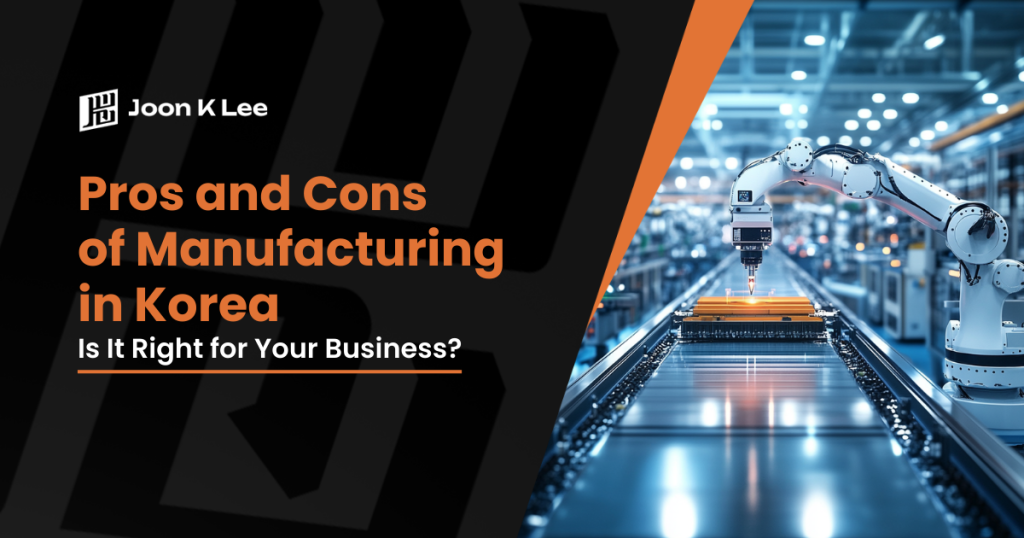
Table of Contents
Why South Korea?
Have you ever wondered why some of the world’s biggest brands—like Samsung, Hyundai, and LG—chose South Korea as their manufacturing hub? It’s not just a coincidence. South Korea has carved out a serious reputation in the global manufacturing landscape, standing tall with its tech innovations, skilled workforce, and a government that loves to back its industry leaders.
But let’s be real. Manufacturing is never just about shiny factories and slick processes. It’s about risk, investment, and asking the hard questions: Is this the right place to build? Will this decision drive profits or headaches?
South Korea is known for its manufacturing prowess, particularly in high-tech sectors like semiconductors, electronics, and automotive. The country has mastered the art of blending tradition with cutting-edge innovation. And for many foreign investors, it’s an attractive option—an advanced economy with a robust infrastructure, skilled labor, and access to global markets.
But (and there’s always a but), like every business decision, it’s not all smooth sailing. South Korea’s manufacturing industry comes with its unique set of strengths and weaknesses. Some businesses thrive here, while others struggle with costs, regulations, and even cultural differences that can complicate business dealings.
So, before you jump in and set up production lines, let’s dive into the nitty-gritty. What makes South Korea a powerhouse in manufacturing, and what potential roadblocks should you watch out for?
The Strengths of South Korea’s Manufacturing Sector
If there’s one thing you should know about South Korea, it’s that the country doesn’t mess around when it comes to manufacturing. Its journey from a war-torn nation to an advanced economy is nothing short of remarkable. Here’s what gives South Korea its competitive edge in the global manufacturing landscape.
1. Technological Advancements & High-Quality Production
South Korea is synonymous with cutting-edge technologies. Think AI, robotics, and automation—the backbone of modern manufacturing. Walk into a South Korean manufacturing facility, and you’ll feel like you’ve stepped into the future. Machines hum in perfect harmony, robots glide across production lines, and everything runs with a level of precision that’s almost hypnotic.
This isn’t just about looking impressive. These advancements translate into high-quality products that meet global standards. Whether it’s smartphones, electric vehicles, or microchips, South Korean manufacturers are setting the bar for excellence.
And let’s not forget about quality control. The emphasis on producing high-quality products isn’t just a corporate slogan—it’s a national pride. South Korean companies know that cutting corners isn’t an option if they want to stay competitive. This is why global brands trust South Korea to deliver products that meet (and often exceed) international expectations.
2. Skilled Workforce & Workforce Development
Behind all the tech and machines is a skilled workforce that’s been carefully cultivated. South Korea invests heavily in workforce development, and it shows. The country has one of the highest rates of education in the world, with a strong focus on STEM (Science, Technology, Engineering, and Mathematics).
This isn’t just about degrees and certificates. It’s about a culture that values precision, hard work, and innovation. Workers are trained to adapt to advanced technologies and are constantly upskilling to keep up with the demands of modern manufacturing.
And here’s where it gets even better. The South Korean government actively supports foreign investors and companies by promoting training programs that align with industry needs. So, when you invest in South Korea, you’re tapping into not just skilled labor but also a system designed to keep that labor world-class.
3. Robust Infrastructure & Strong Government Support
You can’t talk about South Korea’s strengths without mentioning its robust infrastructure. We’re talking world-class ports, efficient transportation networks, and advanced logistics systems that keep supply chains moving smoothly.
For businesses, this means faster production, quicker delivery, and fewer headaches when it comes to moving goods across borders. Plus, South Korea’s strategic location on the Korean Peninsula gives it easy access to other Asian countries and emerging markets, like China and Southeast Asia.
And it doesn’t stop there. The South Korean government is known for rolling out the red carpet for foreign businesses. Tax incentives, regulatory support, and investment programs are all part of the package. So, if you’re looking to set up shop, there’s a good chance you’ll get some extra help to ease the transition.
4. Competitive Edge in High-Tech Industries
Let’s be honest—if your business is in high-tech sectors like electronics, semiconductors, or renewable energy, South Korea is a no-brainer. The country has a head start in these industries and isn’t slowing down. Its dominance in semiconductor manufacturing, for instance, is legendary. We’re talking about some of the most advanced chip-making technologies in the world.
And it’s not just about production. South Korea invests heavily in R&D (Research and Development), pushing the boundaries of what’s possible. Whether it’s AI, advanced technologies, or sustainable solutions, the country is always a few steps ahead.
5. Trade Agreements & Global Market Access
Another huge plus? South Korea’s extensive network of trade agreements. From the U.S. to the European Union, South Korea has signed multiple free trade agreements, making it easier to export goods and reduce tariffs. This global connectivity is a major advantage for companies looking to expand their reach.
Plus, South Korea is positioned as a gateway to the wider Asian market. If you’re eyeing growth in emerging markets, manufacturing in South Korea can offer a strategic edge.
But Wait—It’s Not All Perfect
All of this sounds great, right? A tech-savvy country, a skilled workforce, global market access—it’s like a dream come true for manufacturers. But (and there’s always a but), it’s not all smooth sailing.
South Korea also has its fair share of challenges, from rising labor costs to regulatory changes and even cultural differences that can make doing business a little… complicated.
In the next section, we’ll dive into the flip side—what weaknesses and challenges you should watch out for before jumping into South Korea’s manufacturing sector.
The Weaknesses & Challenges of Manufacturing in South Korea
Alright, so we’ve painted a pretty bright picture so far. But let’s not get carried away. Like every market, South Korea has its own set of challenges—some of which can catch even seasoned business owners off guard.
Setting up manufacturing in South Korea isn’t just about plugging into efficient production lines and riding the wave of South Korea’s economic growth. It’s about understanding the fine print, adapting to unexpected hurdles, and preparing for realities that might not show up in glossy investment brochures.
Here’s what you really need to know.
1. Rising Labor Costs & Workforce Shortages
South Korea is a tech leader, but that comes at a price—literally. Labor costs here are significantly higher than in many other countries in Asia, like Vietnam or Indonesia. This can take a big bite out of profit margins, especially if you’re in a labor-intensive industry.
And here’s the thing: it’s not just about wages. South Korea is grappling with an aging population, and it’s happening fast. The country now has one of the oldest median ages among advanced economies. What does that mean for you? A shrinking pool of younger, physically capable workers—and a growing labor shortage that’s only expected to worsen over the next decade.
This shortage isn’t just a distant concern. It’s already affecting industries that rely on manual labor and skilled technicians. So, unless you’re leaning heavily into automation and AI, you’ll need to plan for workforce development challenges early on.
Pro tip? If you’re considering a move into South Korea, think about how much of your manufacturing can be automated, and how you’ll attract or train skilled workers for the tasks that still require a human touch.
2. Regulatory Changes & Business Environment
South Korea’s business environment can be tricky for foreign companies. Regulations shift often, and policies can feel like a moving target. One day, the South Korean government is offering incentives for foreign investment, and the next, the National Assembly is rolling out new tax requirements or environmental regulations that catch companies off-guard.
Don’t get me wrong—the government is supportive of foreign investors, but navigating the bureaucracy can feel like learning a new language (and no, I don’t just mean Korean). From tax payments to environmental standards, the paperwork and compliance processes can be complex, especially for newcomers.
Plus, South Korea has a reputation for high scrutiny on product quality and safety standards. While that’s great for consumers, it can slow down production or require additional certifications for foreign companies.
If you’re used to quick turnarounds and flexible processes, prepare to pump the brakes. Regulatory compliance here is thorough and detailed, and cutting corners is a recipe for trouble.
3. Geopolitical Risks & Trade Uncertainty
Let’s talk about the elephant in the room—North Korea. It’s no secret that tensions on the Korean Peninsula can heat up unexpectedly. While the impact on day-to-day manufacturing might be minimal, geopolitical risks are always in the background, making some investors hesitant.
Plus, South Korea is deeply connected to global supply chains. This means that when global events shake the market—whether it’s a global financial crisis, shipping delays, or sudden raw material shortages—South Korea feels the impact. And as we’ve seen in recent years, even a single disruption in supply chains can ripple across the world.
For instance, consider the ongoing global demand for semiconductors. Any hiccup in South Korea’s production capacity doesn’t just hit local businesses—it affects industries worldwide, from automotive to electronics.
And then there are trade agreements. While South Korea has plenty, ongoing global political shifts (think tariffs, sanctions, and regulatory battles) can create uncertainty for foreign businesses.
Bottom line? Geopolitical risk is a reality. Smart businesses build contingencies and consider proactive measures—like diversifying suppliers or having backup plans for raw material sourcing.
4. Raw Materials & Energy Dependency
South Korea’s manufacturing strength is impressive, but there’s a catch. The country heavily depends on importing raw materials and natural gas. With limited agricultural sectors and domestic energy resources, manufacturers are at the mercy of global price fluctuations.
This can lead to higher costs, especially when global markets are unstable. And let’s be honest—when was the last time global markets weren’t unpredictable? From fossil fuels to essential metals, price shifts can quickly turn a profitable project into a financial headache.
If your production relies on energy-intensive processes or raw materials that aren’t locally sourced, you’ll need to factor in these risks. Global supply chain disruptions or rising energy costs can impact timelines and budgets.
The upside? South Korea is investing more in renewable energy and advanced technologies to reduce its dependency on imports. But it’s a slow process, and until then, manufacturers need to stay agile.
5. Cultural Barriers & Business Dealings
Let’s not sugarcoat it—cultural differences can pose serious challenges for foreign businesses. South Korea has a deeply rooted business culture that emphasizes hierarchy, respect, and relationships.
If you’re used to casual, straightforward business dealings, the Korean approach might feel formal and slow. Business decisions often require multiple layers of approval, and relationship-building (or “jeong,” as it’s called in Korean culture) is crucial for long-term success.
And then there’s the language barrier. While many South Koreans speak English, especially in tech industries, critical negotiations and legal documents are often in Korean. Misunderstandings can easily arise if you’re not familiar with local business etiquette.
This isn’t meant to scare you off. Plenty of foreign companies thrive in South Korea. But the ones that succeed are those that invest time in understanding cultural barriers and building strong, respectful relationships with local partners.
Is South Korea the Right Fit for Your Business?
Alright, so after hearing both the good and the not-so-good, you’re probably wondering: Is it worth it? Should I dive into South Korea’s manufacturing sector, or look elsewhere?
Here’s a little reality check.
Who Benefits the Most?
- If your business is in high-tech industries—like semiconductors, electronics, renewable energy, or automotive—South Korea offers an incredible environment to thrive.
- If you value advanced technologies and premium production standards, South Korean manufacturers can offer world-class capabilities.
- And if you’re looking to tap into emerging markets in Asia, South Korea’s strategic location makes it a smart choice for building global supply chains.
Who Might Face More Challenges?
- If your industry is labor-intensive and you’re looking for lower costs, South Korea’s rising wages could eat into your margins.
- If you’re unfamiliar with Korean business culture or unprepared for regulatory changes, the road could be bumpy.
- And if your business model is sensitive to energy costs and raw material prices, consider whether South Korea’s energy dependency fits your risk profile.
Valuable Lessons from Industry Leaders
Many foreign companies have succeeded in South Korea, but they didn’t just stumble into success. They adapted. They learned. And most importantly, they respected the local business culture.
Take a page from their playbook:
- Build relationships slowly, but genuinely.
- Learn about regulatory changes and local policies.
- Understand how to manage labor shortages with technology and flexible hiring strategies.
Because when you do it right, manufacturing in South Korea doesn’t just give you products—it gives you products that meet global standards, delivered with precision and quality.
The Future of South Korea’s Manufacturing Industry
South Korea is moving fast, but it’s not a race for everyone. Yes, the manufacturing prowess is undeniable. Yes, the tech is advanced. But it’s not a one-size-fits-all solution.
If you’re in it for high-tech innovation, global market access, and quality control, South Korea is a goldmine. But if you’re chasing low production costs or looking for a market with less regulation, you might face tougher roads ahead.
The key? Know your business. Know your goals. And know that success in South Korea isn’t just about setting up shop—it’s about adapting to a culture, a market, and a rhythm that’s unique.
So, is South Korea the right fit for your manufacturing needs? Only you can answer that. But now, at least, you’ve got the full picture.

FAQs
South Korea’s manufacturing prowess comes from its investment in advanced technologies, a skilled workforce, and a focus on producing high-quality products. Industries like electronics, semiconductors, automotive, and renewable energy are especially strong. Plus, government support and strategic trade agreements give South Korea a competitive edge in the global manufacturing landscape.
While South Korea offers many advantages, challenges include rising labor costs, workforce shortages due to an aging population, and regulatory changes that can affect tax and compliance processes. Additionally, cultural differences in business dealings can pose challenges for companies unfamiliar with Korean business etiquette.
South Korea is strategically positioned on the Korean Peninsula, offering easy access to emerging markets in Asia, including China and Southeast Asia. Its advanced infrastructure and global trade agreements also make it an ideal hub for companies looking to streamline their supply chains and expand into new markets.
It depends on your industry. If you’re focused on high-tech, advanced manufacturing, South Korea’s quality and technological expertise can justify the costs. However, for labor-intensive industries looking for lower production costs, other countries in Asia might offer better margins. It’s important to consider both profit margins and long-term investment potential.
Building strong, respectful relationships is key. Invest time in understanding South Korean business culture, which values hierarchy, respect, and long-term connections. Partnering with local experts, investing in workforce development, and learning about regulatory processes can also ease the transition and help avoid misunderstandings.

Written by Joon K Lee
Owner

Everything You Need To Know About Conversions
Conversion rates are one of the most important indicators you should look…

What are the Best SaaS Tools for Digital Marketers?
Software as a Service, or SaaS, is a cloud-computing software accessed through…