Understanding Nonferrous Metals: Properties, Benefits, and Industrial Applications
September 2024 / Nonferrous Metal

Non ferrous metals play a role in modern industries due to their superior qualities when compared to ferrous metals that are prone to rust due to their iron content. Non-ferrous metals generally exhibit corrosion resistance and have the advantage of being lighter and having high conductivity. These distinctive properties make them indispensable in a range of sectors, such as aerospace manufacturing and the electronics and construction industries. This blog post explores the characteristics and benefits of various metals. It discusses how they are utilized across different industries, with a specific focus placed on aluminum, copper, nickel, and titanium, among others.
What Are Nonferrous Metals?

Nonferrous metals are a category of metals that do not contain iron in amounts. They are comprised of various elements and blends with distinctive properties that differentiate them from ferrous metals. Aluminum, copper, nickel, and titanium must go through a smelting process to get molten metal and separate the metal from impurities. The most commonly used nonferrous metals are:
– Aluminum: Known for its lightweight, high strength-to-weight ratio, and excellent corrosion resistance.
– Copper: Renowned for its exceptional electrical and thermal conductivity.
– Nickel: Nickel-based alloys are valued for their corrosion resistance, particularly in high-temperature environments.
– Titanium: Highly prized for its strength, lightweight, and biocompatibility.
Properties of Nonferrous Metals
To truly comprehend the significance of metals, it’s crucial to explore why they hold such broad appeal in various industries. Here are a few distinctive characteristics that set metals of this kind:
1. Lightweight
Metals that are not ferrous such as aluminum and titanium, possess qualities that make them highly sought after in industries like automotive and aerospace, where minimizing weight is crucial for achieving top-notch performance.
2. Corrosion Resistance
Nonferrous metals are usually known for their ability to resist corrosion better than metals and are often chosen for use in tough environments with high humidity and fluctuating temperatures where they come into contact with substances like chemicals and harsh weather conditions. For example, copper forms a layer of oxide that helps prevent further corrosion making it a popular option for plumbing and electrical applications. Nickel is frequently added to alloys to enhance their resistance to corrosion. Is widely used in creating stainless steel.
3. High Conductivity
Copper and aluminum are popular for their conductivity of electricity and heat flow. The exceptional conductivity and flexibility of copper make it a preferred choice for wiring applications. While not as conductive as copper, aluminum is often used in power lines due to its ease of installation and cost-effectiveness.
4. Non-Magnetic and Ductile
Copper and aluminum are metals that are not magnetic, and this feature is important for various electronic and electrical uses. They are also very flexible, and they can be easily shaped into wires or sheets, which is useful for different manufacturing needs.
Benefits of Nonferrous Metals Over Ferrous Metals

1. Superior Corrosion Resistance
Nonferrous metals such as aluminum and copper offer an advantage in their ability to resist corrosion compared to iron and steel, which rust easily upon contact with moisture and oxygen. This corrosion-resistant quality of metals like titanium also means less reliance on protective coatings and maintenance efforts, in the long run leading to cost savings and improved longevity.
2. Lightweight Yet Strong
Aluminum and titanium are widely used metals known for their impressive strength-to-weight ratios that are highly valued in industries like automotive and aerospace, where reducing weight is key, to enhancing fuel efficiency and performance.
3. Electrical Conductivity
Nonferrous metals play a role in electrical systems because of their excellent conductivity properties—copper is particularly valued for this purpose due to its ability to carry electricity efficiently with little resistance in applications like wiring and electrical machinery such as motors and generators. Additionally, Aluminum is another metal commonly utilized in high-voltage power lines because of its capabilities and lightweight quality, which helps reduce the expenses related to setting up and maintaining these systems.
4. Recyclability
Nonferrous metals can be recycled effectively without losing their attributes over time. This means that materials like aluminum can be recycled over and over again without impacting their quality, making them an eco-friendly option for manufacturing purposes. Recycling nonferrous metals requires less energy than producing them from scratch, which helps cut down greenhouse gas emissions and preserve our precious natural resources in the long run.
Industrial Applications of Nonferrous Metals
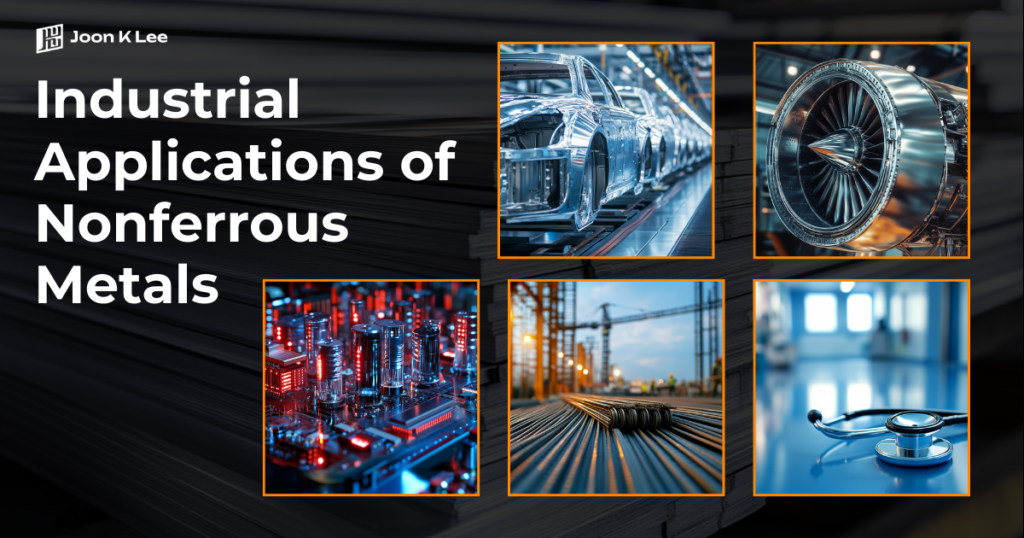
The unique properties and benefits of nonferrous metals make them indispensable in a wide range of industries. Below, we explore some of the primary industrial applications:
1. Automotive Industry
The car industry depends a lot on metals to make vehicles lighter and more fuel efficient while also improving safety measures in place. Aluminum is commonly found in the body and frame of cars well as in engine parts for its durable yet lightweight properties. In the case of vehicles (EVs), both aluminum and copper are crucial components for different reasons; aluminum is used to create lightweight casings for batteries, while copper is necessary for wiring and electrical systems because of its high conductivity levels.
2. Aerospace Industry
In the aerospace industry, weight is important for fuel efficiency and performance of aircraft, so they use titanium and aluminum, which are strong materials that work well in high temperatures for making aircraft frames and engine parts, while aluminum is excellent for fuselage and wings structures because it is lightweight and resistant, to corrosion.
3. Electrical and Electronics Industry
Copper plays a role in the electrical and electronics field due to its excellent electric conductivity and thermal conductivity, which are commonly found in electrical power cables. It finds applications in areas such as wiring systems and electronic components like motors and circuit boards. Additionally, aluminum serves as another material for transmitting power and as a conductor for specific electrical uses where managing weight and expenses is crucial. Aluminum is commonly used in heatsinks due to its good thermal conductivity, efficiently dissipating heat from electronic components. In conclusion, aluminum and copper are widely used in electrical components due to their excellent electrical conductivity. While copper is known for its superior conductivity for electrical power cables, aluminum is often chosen for its lightweight and cost-effective properties in large-scale electrical applications.
4. Construction Industry
The construction sector greatly benefits from metals such as aluminum and copper for their unique properties and the advantages they offer in various applications within the industry. Aluminum finds use in constructing windows and doors as well as for roofing and cladding due to its resilience to wear and tear and low upkeep requirements, alongside its resistance, to corrosion. On the other hand, copper is esteemed for both its enduring nature and visual charm, and it is utilized in plumbing systems, roof installations, and decorative features.
5. Medical and Healthcare Industry
Titanium is commonly employed in the healthcare sector due to its biocompatibility. It doesn’t cause adverse reactions in human tissues. It’s a substance for medical implants like joint replacements and dental implants, as well as surgical tools. Its exceptional strength and ability to resist corrosion also render it ideal for a range of equipment.
Future Trends in Nonferrous Metals Usage
As industries continue to innovate and prioritize sustainability, the demand for nonferrous metals is expected to grow. Key future trends include:
– Increased Demand in Electric Vehicles (EVs): The shift towards electrification in the automotive sector will drive increased demand for lightweight, conductive metals like aluminum and copper.
– Growth in Renewable Energy Systems: As countries strive to meet renewable energy targets, the use of nonferrous metals in solar panels, wind turbines, and battery storage systems will expand.
– Sustainability and Recycling Initiatives: The focus on sustainable practices will lead to greater use of recycled nonferrous metals, reducing environmental impact and improving resource efficiency.
Key Takeaways on the Importance of Nonferrous Metals
Nonferrous metals play a role in today’s industries thanks to their distinct characteristics, like being light in weight and resistant to corrosion while also offering high conductivity properties that are unmatched by ferrous metals. They stand out for their strength-to-weight ratios and ability to be recycled, along with their electrical conductivity, which makes them vital for various sectors, including automotive, aerospace, electronics, and healthcare. As industries worldwide focus more on sustainability, the importance of metals is set to increase, further promoting innovation and development across different fields.
To grasp the characteristics and advantages of metals as well as their practical uses, in industries, businesses and experts can gain a deeper understanding of their worth and apply them efficiently in diverse scenarios.


Written by Joon K Lee
Owner

Everything You Need To Know About Conversions
Conversion rates are one of the most important indicators you should look…

What are the Best SaaS Tools for Digital Marketers?
Software as a Service, or SaaS, is a cloud-computing software accessed through…